




Re-written from Science by Lilah Hosni —
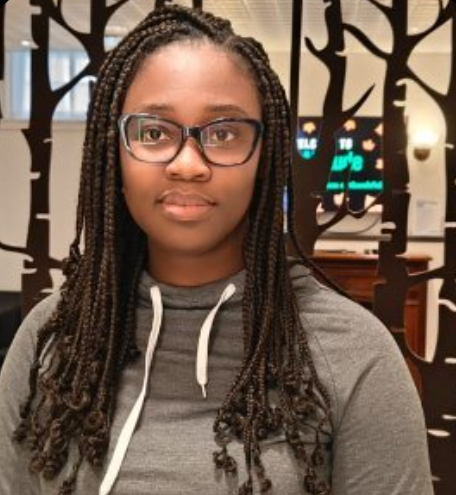
Blessing Okosun was was right in the middle of her her thesis for a PhD when she learned she was pregnant.
“It felt as though the floor had been pulled out from under my feet. I had fought to carve out a space for myself in science as a hard-working Black mom” said the Nigerian. “An unplanned pregnancy seemed like certain professional doom.”
Ordinarly in America, the answer is to abort.
But Blessing chose to carry to term. She already had an 18-month old and had a husband.
She had juggled parenthood and her studies as best she could, determined to follow her academic dream.
She made it through the pandemic and applied for grad school. On one of her virtual interviews, she was not able to secure child care, and the professor was very gracious to allow the interview to proceed even though Blessing was bouncing an infant in her arms. That same professor became Blessing’s Ph.D. supervisor.
The obvious plan during graduate school was to wait before having more children. It was a brutal workload. Somehow, she got pregnant anyway. She tried not to panic, staying home and laying low. When her supervisor called to check up on her, she told her not to panic.
“I realized she was right,” Blessing says. “Instead of retreating from others and spiraling into silence, what I really needed was community.
Blessing called her best friend, mom of two teenage boys, to cry and vent and grapple with shame, fear, grief, frustration about being pregnant in a foreign land far from her family.
As she replotted her continued success at grad school with a pregnancy, she realized she would need help.
“Surviving graduate school as a pregnant student would take a village, made up not of blood relatives, but of fellow graduate student parents,” Blessing tells. “They helped babysit my toddler when my husband was away so I could battle morning sickness or take a nap.”
Planning and coordination was a continual work.
“It wasn’t all rosy. I often had to call my supervisor for help to complete experiments because pregnancy symptoms left me too dizzy,” she admits. “I missed deadlines because of intense nausea and conferences because of anemia and low blood pressure.”
Peers questioned my commitment, whispering comments when I had to leave early for appointments or showed signs of morning sickness. A fellow student unkindly said my few successes were due solely to my supervisor. I felt inadequate as a student and scientist.
“Still, the steadfast support of my village and my supervisor, and my own determination to achieve my professional goals, saw me through,” Blessing says. “I persisted, at home and in the lab, and my definition of success expanded to include resilience.”
It’s been three years, and Blessing expects to finally attain her PhD from the University of North Dakota.
Having another baby didn’t interfere with her becoming a neuroscientist, she says.
“Redefining what success means to me was liberating, allowing me to become a scholar shaped by motherhood rather than diminished by it,” Blessing says. “Now, I pride myself not just on academic and research successes, but also on celebrating my kids’ milestones, showing up for playdates, being present for tantrums and bedtime stories. I am grateful to my supervisor, who reminded me, ‘You belong here. Even like this. Especially like this.'”
Related content: When Planned Parenthood did webcam abortions, finding a meaning in a life of spinal muscular atrophy, Bevelyn Williams is fearless life protestor.

1 Comment
Pingback: ‘Oh my peanuts!’ Mom overjoyed, daughter doesn’t abort – Pilgrim Dispatch News