




By Alex Brick and Caleb Campos —
Scotland — the hollow center of the crater that is post-Christian Europe — is starting to see signs of revival.
The Church of Scotland reported doubling “affirmations of faith” last year compared to 2021. At a mere 820 people, that’s no avalanche — and certainly not enough to offset deaths in the historic “kirk.”
More charismatic churches report increased attendance at prayer gatherings, large youth worship events, more adult baptisms and professions of faith and new church plants — all forerunners to statistical revival.
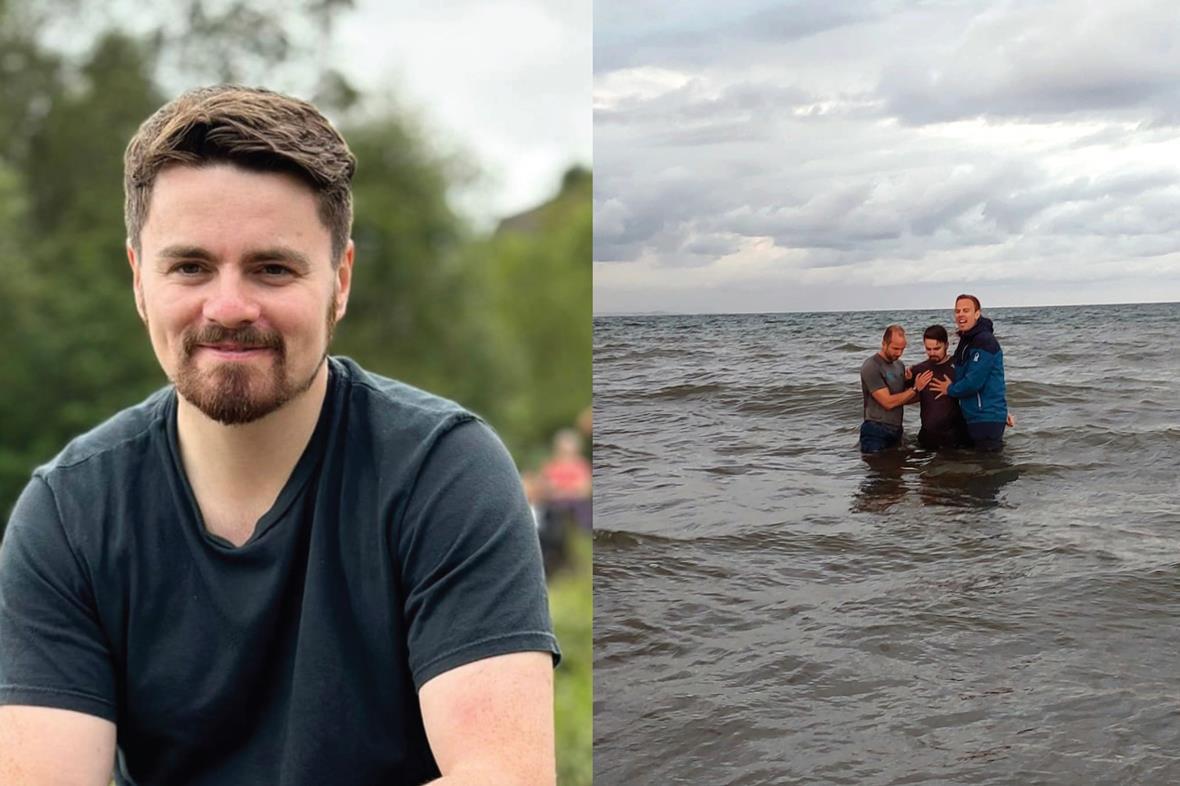
“What really stood out to me was how welcoming and loving everyone was,” says new convert Martin, who was baptized in Portobello Beach, Edinburgh. “I now realize it was God’s presence I was experiencing. I continued going to church and small group each week and was given my first Bible, which I eventually began to read. What really stood out to me was the love through the words.”
Once the birthplace of worldwide revivals, Scotland in the 1980s became a veritable epicenter of secularism. The Church of Scotland once boasted 1M members; it now has 250K. In the 2022 census, for the first time, the majority of people reported having no religion.
Correspondingly, non-Christian policies have surged: secular government, progressive social policies, expanded LGBT rights, liberal abortion policies. The so-called hate crime laws curtail Christian preachers.
But just when Scotland was given up for a spiritual wasteland, the Spirit began to move.
In the land of John Knox, the Cambuslang Revival (1742), the Kilsyth Revival (1839) and the Hebrides Revival (1949-53), young people are coming to Christ after a generation waltzed towards the world.
“There remains a deep spiritual hunger,” says Rev. David Cameron, who serves as the Convener of the Assembly Trustees of the Church of Scotland.
“Rumors of what’s happening in Scotland are spreading across the UK, so there’s a definite recognition of a need for unity and persistent prayer,” says Peter Anderson, senior pastor of City on a Hill, Edinburgh.
One of the drivers of revival, reportedly, is widespread addiction. Scotland also has the highest rate of addiction-related deaths in western Europe.
“There’s an epidemic of addiction in Scotland, dating back to the second world war, so it’s three to four generations deep now,” says Jim Gibson, pastor of Freedom City Church. Now there’s “a desperation to see change. And when people do find Jesus, there’s a desperation to see it through.”
Prayer meetings are also driving revival.
“There are definitely green shoots of revival,” says Lynne Paterson, head of the Evangelical Alliance in Scotland. “It’s like there’s a wineskin, but the wine has not yet poured out.”
However, three surveys — Labour Force Survey, British Social Attitudes and Pew Research — are failing to find statistical substantiation of the the revival narrative.
By contrast, the U.K. Bible Society survey noted in 2025 an upswing on church attendance and Bible reading, especially among Gen z and Millennials.
Martin, in his second year at Edinburgh Napier University, doesn’t care about statistics. What he cares about is the change Jesus has brought to his life.
“I have been through a lot of pain and struggles, which resulted in me losing trust in people,” Martin says. “It got to a point where something needed to happen, otherwise I would no longer be on this earth.”
Related content: Irish warlock found his power was weaker than Christ’s, Conor McGregor came to Christ on ibogaine, Third World sends missionaries to the First World. Sources: Premier Christianity, Guardian, Pew Research, Christian Post, others.

2 Comments
Pingback: The Spirit begins to move in super secular Germany – Pilgrim Dispatch News
Pingback: Scotland, spiritual wasteland, sees sunrise of faith | Mustard Seed Budget