




By Abdul Masih —
To beat the ban on the Gospel, missionaries in North Korea are equipped with MP3 Bibles the size of a small coin, MP4 Jesus film projectors the size of a credit card and hologram Bibles projected from a lithium battery-powered device the size of a pill — all smuggled in with shipments of rice and canned foods.
“It is virtually impossible” to stop the inflow these innovations, says Eugene Bach, of the Back to Jerusalem missionary movement. “We have been born in the best era ever to be a part of missions. It’s never been easier than now to get the Scripture into people’s hands.”
As the U.S. and Israel are winning the war against Iran with technology, Christians are winning the War of Faiths via technology . Satellite T.V. has brought the Gospel into Iran. Programs in Arabic are broadcast into the Islamic Belt. The current technology explosion is bringing a corresponding explosion of evangelism.
The wave of new technological methods for presenting the Gospel is now Tsunami size. It’s start dates back to 1481 when Bayezid II, eighth sultan of the Ottoman Empire, banned the printing press from Islamdom for uses in Arabic. He feared the resulting increase of knowledge would lead to doubting Islam and weakening his rule, some historians say.
The ban lasted for about 250 years and set back Muslim civilization, which lost the cutting edge and stopped being a threat to Christendom and Western Civilization. When the British defeated the Ottoman Empire in 1918, it could be traced back to the fateful decision of 1481.
Tyranny survives in blackout. Even Mohammad, sensing that questioning would be detrimental to his religion, told followers to NOT ask tough questions in Qur’an 5:101 and mandated death for anyone who left or questioned Islam. It now appears that Mohammad’s forebodings were justified.

Father Zakaria Botros has won uncounted millions to Christianity from Islam by broadcasting critiques based on Islamic sources. Botros, an Egyptian Copt who reads Arabic and has access to their sources , has unearthed some of the craziest stuff in the hadiths and Arabic literature. But his expertise was not enough; he needed technology to amplify his audience. So effective he is that Al-Qaeda placed a $60M bounty on his head.
Into Iran, there are some 10 separate satellite channels broadcasting. Even before the current conflagration, two-thirds of mosques had closed due to lack of attendance. ICNET TV, based on Canada, that 17M viewers (or 25% of Iran’s population) logged on to its Christian programming on Jan. 19, the day the regime imposed martial law and protesters stayed home.
David Wood, who has less reach than Botros because posts in English, says that commonly Muslims affirm that his critiques only strengthen their faith in Islam. Years later they log on again to switch position; they logged on curious and the seeds of doubt flourished into full-fledged conversion.
Oodles of comments on Wood’s and others’ videos repeat a mantra: the birth of the Internet is the death of Islam. (For example, there are NO archaeological finds in Mecca, early mosques point to Petra, earliest documents come 200 years after Mohammad’s supposed existence, his biography was compiled by a German, etc. These and many other critiques of Islam are widely available on the Internet.)
What’s the cure for Islam has been the cure for communism.
Eugene Bach hosts an annual Back to Jerusalem Hacker Conference in the remote mountains of Tennessee to invite the Christians from Google, Facebook, Oracle and even the CIA, U.S. cyber units and NASA to bring their know-how to the challenge of spreading the Gospel.
The result? Formerly closed countries are no longer closed. They are “creative access” countries. In other words, you can’t keep the Gospel out. Technology provides smaller and more sophisticated ways to get the Scriptures in. It’s working in North Korea, Bach says.
Daniel Maritz increased his reach by 600M simply by using HeyGen to translate his Christian videos into Hindi. The AI also makes lips appear to pronounce the words and syncs timing.
Arch Bonnema used to travel once a month to bring the Gospel to remote parts of the Earth. Now, he is focused mostly on getting Audio Bibles into the hands of Pakistanis overlooked by the government. He’s distributed some 30K; they’re effective because most people can’t read or write, but they can listen to the Bible in Urdu.

If you want to do something quick and easy to impact Islamic nations, pick one of them and find a post on Islam that you think might reach Muslims — and pay for an ad on X to share it in, say, Pakistan. It’s really that simple. Technology makes it simple.
For decades, the Jesus film was the technological wonder of the Third World. Masses of conversions and masses of churches resulted from simply a guy taking a projector into the bush and showing the life of Jesus to indigenous peoples.
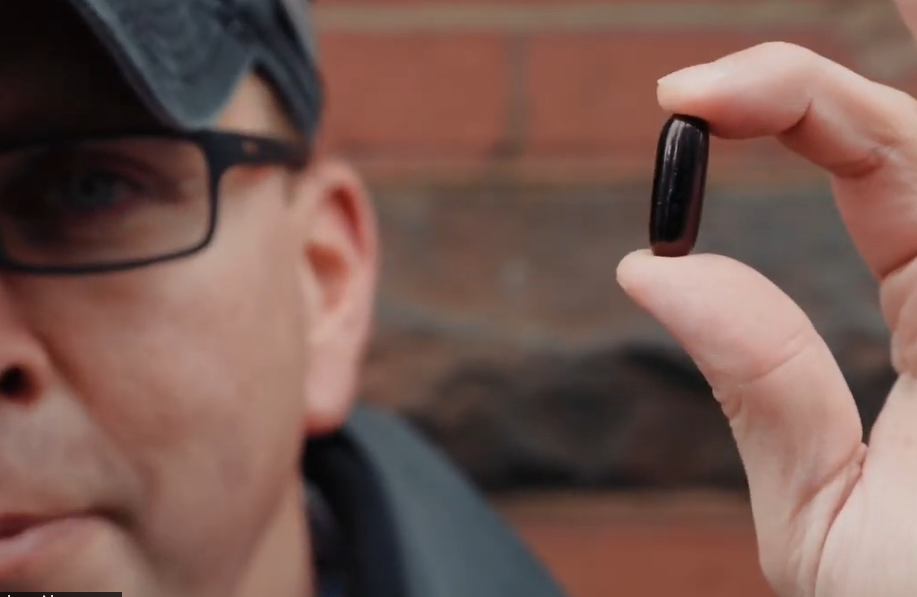
The pill-size hologram Bible can be coated with silicone to be swallowed for border crossings. It illuminates the air in front of your face and the battery lasts a year. “There’s no device like it on Earth,” Bach says. In addition to North Korea, the hologram Bible is ideal for Yemen and Somalia.
Sources: Eugene Bach’s Jesus in North Korea, Missions Pulse, others.

1 Comment
Pingback: AI makes reaching 600M possible – Pilgrim Dispatch News