




By Keziah Mendez –
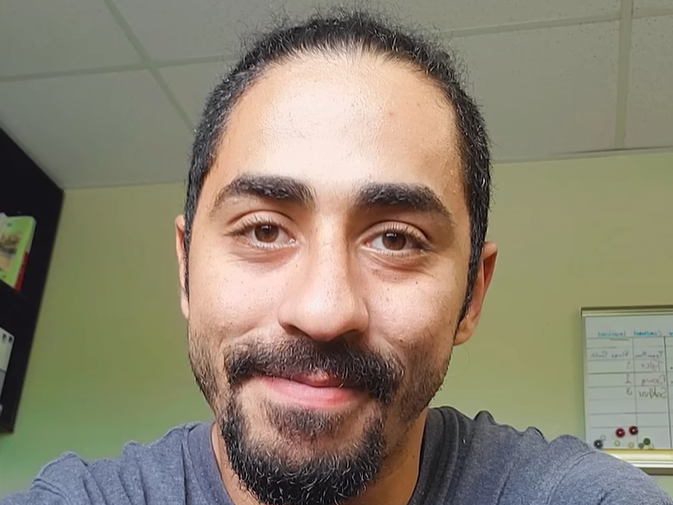
The first time Sakhar Alzubaidi opened an Arabic Bible in Canada, the pages immediately began challenging everything he had believed growing up in Saudi Arabia.
“I started seeing Jesus as the way he is,” said Alzubaidi, “ from the people who lived with Jesus actually and saw Jesus, not from Islamic traditions.”
Raised in a devout Muslim family, Alzubaidi had only heard about Christianity through the lens of Islam, where Christians were often described as people who worshiped three gods instead of one.
“Christians will worship this triune God,” he said,“ which is actually three gods, not one God (according to Islam).”
His understanding was shaped almost entirely by Islamic teaching because access to Christian sources was extremely limited where he grew up.
“Even when you try to look up some verses from the Bible,” Alzubaidi said, “in Saudi Arabia on the internet, the site would be blocked.”
Everything changed when he moved to Canada and could finally read the Bible himself in his own language.
“It was fascinating actually,” said Alzubaidi. “It was amazing how powerful his teaching is and how I can apply it to myself.”
As he continued reading, Alzubaidi began comparing the teachings of Jesus with the religious system he had always known.
“If you do this comparison and you’re honest with yourself,” he said, “you will be able to see which one is a man-made religion and which one is from God.”
But the influence that pushed him most wasn’t a book or debate.
It was the daily behavior of a Christian boss.
“I could see there’s something different about this guy,” Alzubaidi said, “how he treats me, how he treats everyone around him.”
The man never pressured him to convert, yet the quiet consistency of his actions left a strong impression.
“This guy is,” said Alzubaidi, “really following Christ.”
Another coworker, the son of a pastor, challenged Alzubaidi ’s beliefs through frequent debates.
“He would say,” he said, “‘Sakar, look at this, does that make sense?’”
Those conversations planted questions that grew over time.
“This makes sense,” Alzubaidi said, “this is not like what we were taught.”
As doubts about Islam began forming, Alzubaidi sought answers from Islamic religious leaders.
“A lot of them would say to me, this is the devil in your heart,” he said. “Your heart is not clean.”
Instead of addressing the questions, he felt the responsibility was shifted back onto him.
“They wouldn’t say maybe there is a misunderstanding,” he said. “They would say it’s you.”
When he brought questions to Christian pastors, the response felt different.
“If he knows the answer he would tell me,” Alzubaidi said, “and if he doesn’t know he would say, ‘I don’t know.’”
That difference convinced him that one system encouraged open questions while the other discouraged them.
“Somebody is trying to hide something from people,” said Alzubaidi. “And somebody doesn’t care because that’s the truth.”
Now Alzubaidi encourages others who are questioning their beliefs not to suppress their doubts.
“Don’t be afraid” he said. “If you want to know the truth, pray that God will show you the truth and he will.”
Related content: Smashed with bats for leaving Islam, ayatollah’s death spells end of Islam, Iran is the most Islamophobic nation.

1 Comment
Pingback: Ethiopian Bible shows African origin to Christianity – Pilgrim Dispatch News