




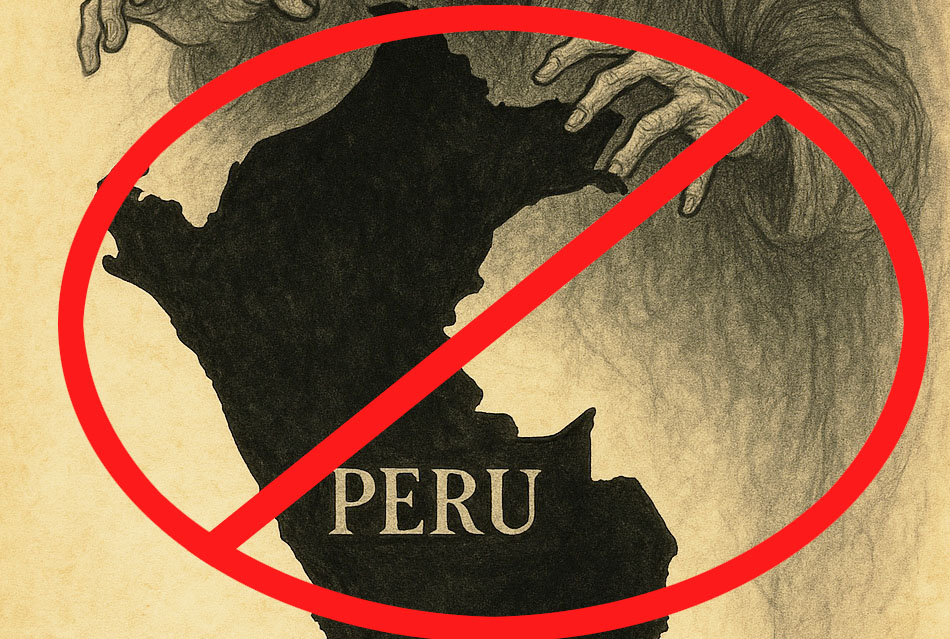
In the culture wars of Latin America, few stories are as remarkable as the one now emerging from Peru. There, a grassroots movement of Evangelical Christians, armed with nothing but conviction and courage, forced billionaire financier George Soros and his network of Open Society–backed activists to pack up and leave after years of pouring money into campaigns to push gender ideology and anti-traditional values.
Soros Meets His Match
For decades, Soros has been the global patron saint of the left’s most extreme social experiments—funding abortion activists, pushing radical gender policies, and underwriting campaigns to rewrite constitutions. In country after country, the pattern is the same: flood local NGOs with money, weaponize academia, infiltrate school curricula, and pressure politicians to adopt policies that dismantle family structures.
But in Peru, things didn’t go as planned. Despite a decade of Soros-backed activism, Peru refused to legalize abortion, gay marriage, gender self-ID, or even civil unions. Soros himself admitted defeat, publicly rebuking his local partners for “wasting his money” and cutting funding altogether.
Who’s Funding Whom?
$32 Billion War Chest: Since 1984, George Soros has funneled more than $32 billion into his Open Society Foundations (OSF), making it the world’s largest private sponsor of leftist NGOs.
Top LGBTQ+ Funder: OSF ranks among the top ten all-time global funders of LGBTQI+ initiatives, bankrolling groups such as ILGA-Europe, OutRight International, and Transgender Europe.
Global Reach: From Africa to Latin America to the U.S., Soros money has targeted constitutional rewrites, gender “recognition” laws, and school curricula designed to push children into confusion about their identity.
Direct Impact: Grants fund lawsuits, lobbying, and “anti-discrimination” laws tied to gender identity.
Indirect Impact: By supporting mega-NGOs like Human Rights Watch, Soros indirectly bankrolls LGBTQ+ campaigns under the guise of human rights.
Critics Call It “Ideological Colonization”: Peruvian leaders branded Soros’s influence as a form of colonialism—foreign elites imposing alien dogmas on sovereign nations.
The Rise of “Don’t Mess With Our Kids”
At the heart of Peru’s resistance was Christian Rosas, a young Evangelical leader and the son and grandson of pastors. Rosas founded the now-famous movement “Don’t Mess With Our Kids”, a rallying cry that united Evangelicals, Catholics, and ordinary Peruvians against gender ideology.
When the Peruvian government passed nine laws introducing SOGI (sexual orientation and gender identity) policies in schools, Rosas and his allies responded not with silence, but with defiance. Appearing on national television, Rosas openly refused to use “preferred pronouns,” telling one activist: “I cannot pretend not to know what everybody knows. I cannot repeat a lie. I will gladly go to prison rather than reject the truth.”
That moment ignited a movement. Social media lit up with thousands of Peruvians declaring, “I plead guilty too. Sue me as well.” Mass rallies followed. Laws were openly defied on a scale so vast that they became unenforceable. Within months, Congress was forced to repeal all nine Soros-backed laws.
A Coalition of Faith and Freedom
What made Peru unique was the coalition Rosas helped build. Evangelicals linked arms with Catholics, parents’ groups, and concerned citizens. The framing was brilliant: this wasn’t just about theology, but about sovereignty. Rosas called Soros’s agenda “ideological colonization”—an attempt by foreign elites to impose their values on Peruvians, much like Spain once imposed colonial rule.
That message resonated far beyond the churches. Secular Peruvians, nationalists, and everyday families rallied around the idea that their nation’s children should not be the experimental subjects of global billionaires.
Civil Disobedience and Courage
Rosas rooted the movement in the Christian tradition of civil disobedience. “When men demand what God forbids, we must obey God rather than men,” he told his followers.
And it was Rosas’ willingness to risk prison for truth that emboldened thousands. Even when the government tried to double down, the people forced resignations: first the education minister, then the prime minister, and finally even the president himself. Each attempt to enforce the Soros agenda was met with mass mobilization, prayer, and unyielding resolve.
Lessons for the U.S.
The Peruvian victory offers a clear message: the global left can be beaten when families and faith communities stand united. The success of “Don’t Mess With Our Kids” shows how courage, coalition-building, and moral clarity can overpower even the bottomless checkbooks of globalist billionaires.
In an age where Soros-backed groups still push radical gender ideology across Europe and North America, Peru’s Christians have lit a path forward. They proved that when parents and believers draw a line in the sand and say “Don’t Mess With Our Kids,” even George Soros is forced to retreat.
Charlie Kirk and the American Battlefront
The Peruvian story also echoes in the United States. Charlie Kirk, the late founder of Turning Point USA, was one of the most outspoken critics of Soros’s cultural agenda. Kirk repeatedly warned about OSF’s influence in academia, politics, and youth culture—arguing that Soros’s billions were destabilizing traditional family values and indoctrinating the next generation.
After Kirk’s assassination during a campus event in September 2025, his allies pointed to Peru as a model of resistance. If Christians in Peru could drive Soros out, why couldn’t American families do the same?
Even as OSF publicly condemned political violence, the contrast was stark: Soros’s billions remain hard at work in American classrooms and legislatures, while the grassroots courage of parents and believers is often the only thing standing in the way.
