





Critique
By Karine Keyser–
Socialism is becoming the more prominent option for indolent people.
The U.S. was partially built on the idea that “the harder the conflict, the more glorious the triumph.” This means people need to work hard to get the results they want.
“Hard times create strong men, strong men create good times, good times create weak men, and weak men create hard times,” says G. Michael Hopf. In other words, idle people today are creating the hard times that will need to be dealt with by future generations.
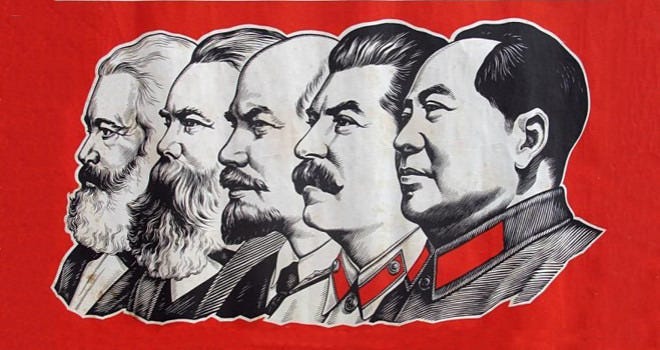
The conservative side in politics believes that the ideas used in the founding of the U.S. are what make it different from the rest of the world. And those core values need to be kept and taught.
If they have stayed this long and held up the U.S. for almost 250 years, what is stopping them from continuing their legacy and holding up the U.S. for many more years to come?
The answer is man’s sinful nature.
The way the U.S. was built allows people to climb the social and economic ladder, and there are many people in the U.S. who use this to their advantage. Unfortunately, some people become envious of other’s success and wealth, without noticing the struggles they went through to get to the top.
This creates a want for equality and a desire to bring down the rich and powerful, which are core values of socialism, which can eventually become communism. Socialism is a political and economic system that cannot work.
The question is, has socialism ever truly worked?
No, it has not.

The beginnings of socialism, and the failure of its beginnings, has been socialism’s story. It was first implemented in the Soviet Union. Before the USSR became a communist party, it was socialist.
The Russian Soviet Federative Socialist Republic was born on Nov. 7, 1917, following the Bolshevik Revolution in October 1917. Vladimir Lenin was the leader of the Bolshevik Party.
He was originally inspired by Karl Marx’s Communist Manifesto, in which Marx argued that the working class should overthrow the upper class to create a society where people would not have to worry about the costs of survival and could focus on their true potential and fulfillment.
Marx thought that capitalist social classes were what made people suffer and lose hope for their future.

Along with Marx’s ideas for a perfect society, his co-writer of the Communist Manifesto, Friedrich Engels, believed that a family unit was also unnecessary, as it was a form of capitalist social classes where women and children were made to do slave labor, and men had the power. This is one view that has been gaining popularity in the U.S. under the feminist movement.
Lenin used Marxist ideas to build up a powerful state by abolishing private property and taking control of manufacturing and resources, which they redistributed to the working class. There was universal health care, food for everyone and a set income for everyone. Ha! That didn’t work. The Soviet Union collapsed.
Ultimately, the USSR’s demise came because a communist economy could not compete with a capitalist one; the Soviet Union was losing the arm’s race with America. Mikhail Gorbachev attempted reform but was unable to provide for the people and the growing economic struggles that the Communist Party was causing for the country.

“In 1992, just as the reforms began, net grain imports for Russia and Ukraine were 21.7 million mt, about 10% of total world imports,” said the USDA’s 2002 report “The Agricultural Sector Before the Breakup of the Soviet Union.”
Farmers were not paid by their output; if they harvested less, they weren’t sanctioned; if they harvested more, they weren’t rewarded. There was no incentive to work hard.
This is one of the reasons why many people believe that socialism cannot work. Without incentives, people will refuse to innovate and actually go beyond the bare minimum.
The only way countries like the U.S. can grow is if some people go beyond the minimum and sacrifice their time for the betterment of future generations. Capitalism is the economic system that allows this to happen.
So why has capitalism become so disliked by the American people ?
A 2019 survey done by Monmouth University showed that 39% of respondents had a positive view of capitalism, 40% were neutral and 17% had a negative view.
Why were so many people neutral?

The answer was found through a survey done in 2019 by the Pew Research Center to compare people’s views on socialism and capitalism. It found that Republicans “cared” more about “tradition” and viewed socialism as bad, while Democrats and politically non-alligned cared about morality and feelings and were more likely to view socialism as good.
These statistics meant that, firstly, there is growth in American support for socialism because, secondly, people are becoming more infatuated with feelings rather than seeing the reality of things.
The growth of liberal teaching in universities is one factor that leads to this growing desire for equality and bringing down the rich.

A 2024 survey done by The Foundation for Individual Rights and Expression showed that out of faculty at 55 elite private colleges and flagship state universities, about 59% identified as far left, liberal, or slightly liberal; about 18% identified as moderate; and 16% identified as slightly conservative or conservative.
This was just one of many statistics acknowledging that universities have more liberal teachers than conservative ones, which could indoctrinate students as a result of ideological bias.
Liberals teach that people have a right to food, housing, health care; they are not earned. But Bible says, “He who does not work shall not eat.”
Liberal foster victim mentality: you can’t achieve and succeed because capitalists/whites/men/straights won’t let you succeed. So if you can’t, why try? Just mass protest and demand “justice;” take away from those who have and give to the have-nots.
Liberals live by envy.
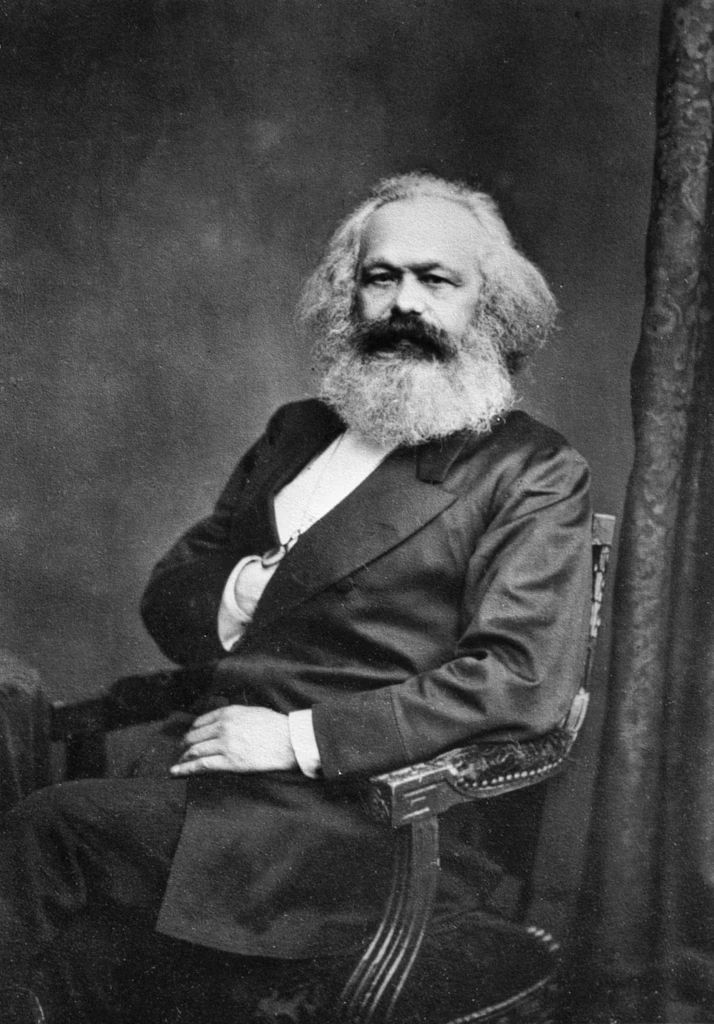
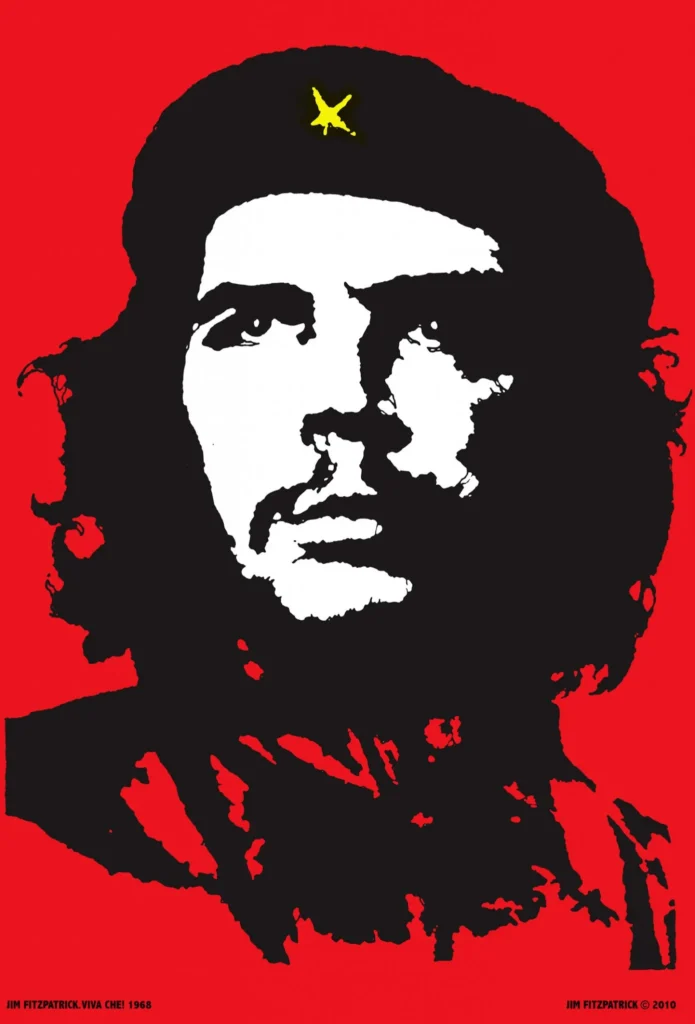
By contrast, the conservative idea gives people hope that they can turn around their lives as long as they’re willing to put in the effort.
Supposedly, socialism gives to each as needed, takes contributions from people according to their ability. It’s a wonderful proposition for equality. The only trouble is that it doesn’t work. In reality, you toppled the oligarchy only to replace it with the leaders of the socialist movement who become the next oligarchy.
An example of this is the universal healthcare system.
The Monmouth University poll found that 58% of respondents either strongly or somewhat supported a universal healthcare system, while only 37% said they oppose the idea. A majority, 53%, said universal health care is not a socialist idea, against 37% who said that it is.
In an ideal world, getting help for everyone would be amazing. In reality, it leads to loss of individual choice, bureaucratic inefficiency, longer wait times, higher taxes, reduced innovation and lower quality of care. There have been cases where the government decides to stop caring for certain patients (let them die) too.

Many people cite Germany, the U.K. and France as countries having universal healthcare systems that work. They don’t mention that in Germany 15% of your wages goes to health care, in the U.K. and France it’s 10%. There’s no such thing as “free” healthcare; there’s always a hefty price tag.
The lie of socialism is that hardship is undesireable. America was founded by pioneers; they left the class society of England with virtually no upward mobility to come and take on wilderness to build a future for themselves. Many Americans have lost the spirit of the pioneer.

“The journey in between what you once were and who you are now becoming is where the dance of life takes place,” says Barbara De Angelis, a New York Times-bestselling author with a PhD in psychology.
America needs to rediscover the values upon which it was founded and over which its greatness was built.
How much socialism is healthy?
Rare is the person who will have NO socialism whatsover, but too much socialism is unsustainable.
The Industrial Revolution in the 1800s and the Gilded Age show that unbridled capitalism can be predatory. With them, horrible working conditions, 12-hour workdays, unsafe work conditions and child labor led people to eventually call for government intervention.

The governments stepped in with welfare programs, safety regulations, work hour limitations and laws to guard against child labor.
When the Great Depression hit many countries in the West, like the US, Canada, France, Germany and many Latin American countries, with huge unemployment rates, poverty, and bank failures, governments again tried to solve the crisis by legislation and government-sponsored work and social programs.
Ultimately, it was World War 2 that pulled the world out of the Great Depression. But people grew accustomed to expecting the government to always help the working people.
But too much socialism is unsustainable. Take China for example. It stagnated its economy until it partially restored capitalism. In 1978, Deng Xiaoping abandoned the government-directed collectivization of farming, the banning of private enterprise and control of prices and production.
When China “opened up,” it became an economic powerhouse.
A survey of socialism/communism around the world.
Another example how socialism/communism fails is Cuba. Since overthrowing the nation in 1959, Fidel Castro shipwrecked the nations economy. From inception, it was held on life support; the Soviet Union propped up the economy by sending about $15M a day. With the collapse of the USSR, Cuba descended into starvation.
Cuba was famous for its free education and free healthcare, but its doctors earned $20/month. That was a high salary on the Cuban pay scale.
Consider Vietnam, which fell to communism in 1975. The government centralized the economy, largely eliminated private business and collectivized farms. The socialist experiment was short-lived. By 1986, the government changed course completely with the policy of Đổi Mới (“Renovation”).
Farmers were allowed to sell surplus for profit, private businesses were legalized, foreign investment was allowed, prices were liberalized. What is the result of restoring capitalism? Its per capita GDP went from $200 to $4,000+. Vietnam is a manufacturing hub (electronics, textiles, clothing, furniture).
Nearby Cambodia also adopted communism to its own severe and tragic demise. Pol Pot’s Khmer Rouge took over in 1975 and forced city-dwellers into the countryside to build a pure agrarian communist society. Money, markets and private property were abolished; religion, education and family structures were dismantled. Some 2M people either were killed or died.
Yeah, it didn’t go well. It never goes well: Nicaragua, South Africa, Eritrea, Tanzania, Portugal, Sri Lanka, Laos. Not one example of success of socialism. People point to Nordic countries with their success, but they are actually capitalistic societies that are so successful capitalistically that they can afford to fool around with huge socialist policies.
The United Kingdom has implementing more and more socialism. As a result, in an apples-to-apples comparison that factors income, cost of living, taxes and government benefits, the UK ranks among the poorest 15 states in America (comparing if the UK were a state of America).
The US has over 24 million millionaires, accounting for approximately 41% of the global total number of millionaires.
What do you call it when a theory fails in every experiment ever performed yet people believe the theory? You call it unscientific.
“Marx predicted that certain things would happen and then they didn’t happen and his followers continued believing in the in the theories that that was an example of sort of an unscientific way of behaving,” said Dr. Daniel Allington, professor of Cultural Analytics at King’s College London.

2 Comments
Pingback: They pushed suicide on her – Pilgrim Dispatch News
Pingback: Socialized medicine urged suicide for her | Mustard Seed Budget