




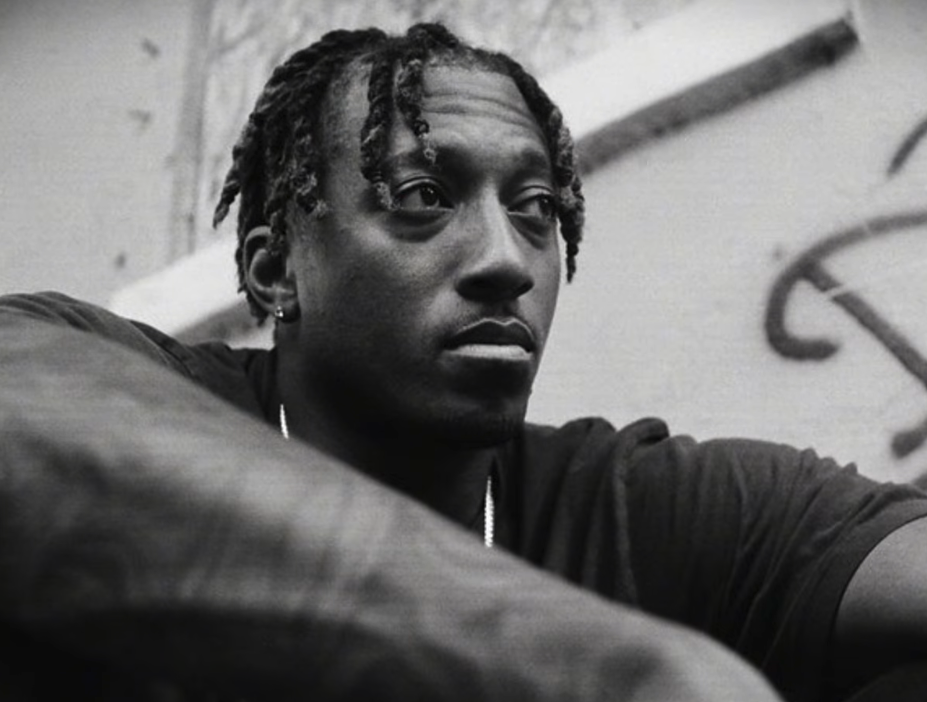
By Abigail Sanchez Aguilar –
Has won four Grammys, 10 nominations and the title twice Best Christian Music Performer.
He grew up without a father, got sexually abused as a young child, dealt with drugs at 16, and pointed a gun at a woman on the streets to feel some sort of spark.
Most people don’t know his story. When he was succeeding in his career, he was really close to give it all up.
The man who brought Christian rap from the margin to the mainstream, Lecrae Devon Moore was born on Oct. 9, 1979 in Houston, Texas.
To pursue his drug addiction, his father left him when he was a baby. A babysitter sexually abused him when he was 7. His mother was a single parent who didn’t really have a stable place for him and his siblings.
By the age of 17, he was doing drugs, drinking and selling drugs in order to make a little bit of more money.
When he trafficked, he would bring his grandma’s bible as a good luck charm, a protection.
One day, he got arrested for drug possession, but when the officer saw his bible, he gave him an ultimatum: He let him go but warned him that if he caught him again, he wouldn’t be lenient.
At the University of North Texas, he tried to turn over a new leaf.
After a massive car accident (his truck rolled multiple times), he redoubled his efforts to be a better person. He volunteered in a juvenile correctional facility in Denton, TX, to help those kids who were labeled as “young criminals.” Not only did he share with the kids, he rapped for them.
It gave a purpose to his life.
Partnering with investor Ben Washer in 2004, Lecrae launched independent label Reach Records with his first album Real Talk. Prior to Reach, no one had shown that Christian rap could be a sustainable business. Without help, it hit #29 on Billboard’s Gospel Music chart.
In 2008, his album Rebel hit #1 on the chart. His success only grew: a BET performance, awards. Gravity won the Best Gospel Album, his first Grammy.
Then in 2014, Michael Brown was killed by police in Ferguson, Missouri, and Lecrae was deeply affected, identifying with a fellow black man, whom he felt was a victim of institutionalized racism. He began to push the message out that America needed to stop racism.
“Empathy goes a long way,” he said. “Whether Mike Brown was wrong or not, his death exposed wounds that have not healed.”
When Christians pushed back against the Defund-the-Police movement and sharp rhetoric struck at him, Lecrae became disillusioned and got mad at Christians. Words from respected black pastor Voddie Bauchum in particular stung.
The push back also came in the form of a precipitous decline in album sales. Anomaly sold 88,000; All Things Work Together sold a mere 23,000 – the disappearance of three-quarters of his fan base. He had burned his primary audience of white evangelicals.
Things only got worse when Lecrae supported Georgia Senator Raphael Warnock, a Baptist pastor who also supports abortion (Lecrae testifies that his girlfriend in college got an abortion, and he basically supported the idea of abortion).

In hindsight, Lecrae says he “deconstructed” the religion of churches, saying a lot of Christians followed American culture more than God.
Lecrae dropped music and got therapy. The abuse in his childhood, the abandonment, the street lie, the PTSD all weighed on him, and he had never worked it through properly.
Instead of leaving God, he got back with God. He traveled to Israel and was re-baptized. His album Restoration was confessional. His tenth studio album Reconstruction. Christ remained the foundation, but parts of his worldview, church experience and identity needed rebuilding.
“I remember thinking, ‘I don’t know if I believe any of this anymore.’ I was angry. I was hurt. I was confused. I was disillusioned with the church, with myself, with the systems around me,” Lecrae says. “But the interesting thing is that even when I wanted to run from God, I couldn’t shake Jesus. I couldn’t escape Him.”
Related content: Kanye repents of antisemitism, rapper 360 pulls a 180, Daddy Yankee turns to Christ.

1 Comment
Pingback: How Lecrae lost the plot and got it back | Mustard Seed Budget