




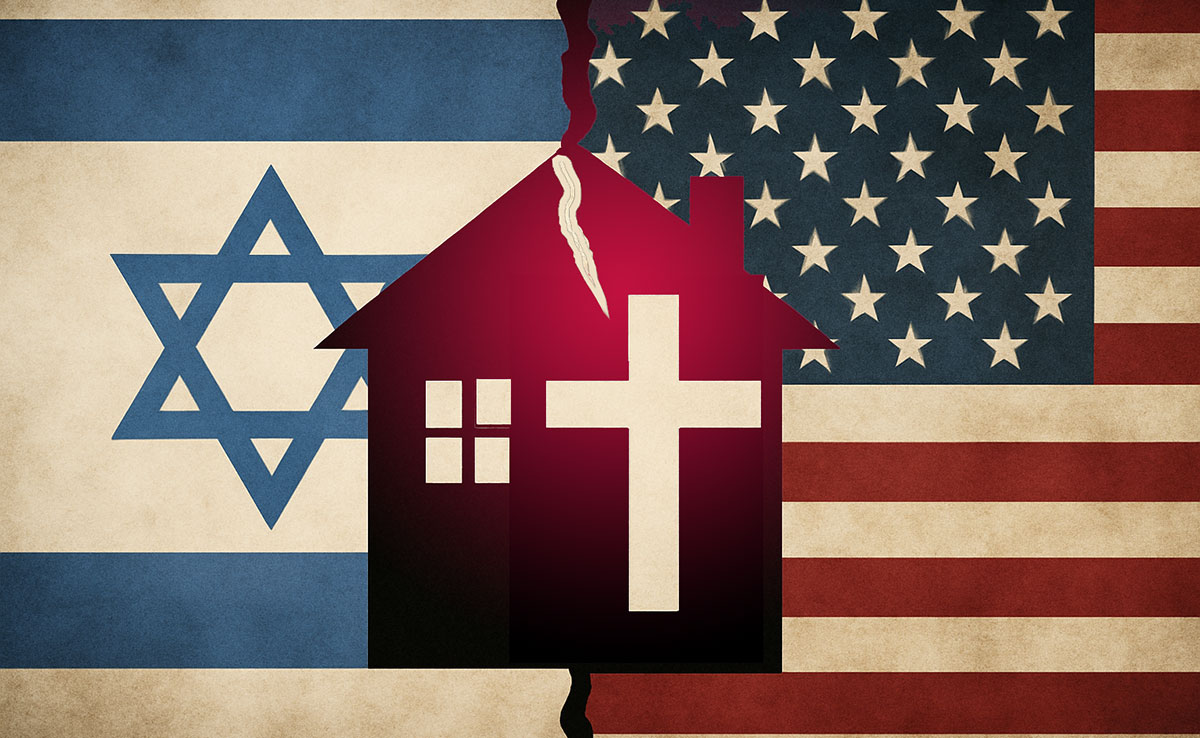
For decades, conservatives—evangelicals, Catholics, and others—have stood shoulder-to-shoulder with Israel, seeing it as a vital ally in a chaotic world. The Jewish state has been a beacon of democracy in the Middle East, a partner against threats like terrorism and Iran’s aggression. From church pews to GOP rallies, support for Israel has been a rallying cry, uniting millions who value freedom and stability. But a troubling divide is emerging. Influential isolationist voices like Tucker Carlson and Candace Owens are challenging this alliance from within Donald Trump’s centrist-Right coalition, while woke activist, progressive Christians and many Black Church congregations aligned with Democrats attack Israel’s conduct during its war for survival against Hamas aggression. It seems bitter enemies on the conservative Right and far Left fringes of both parties are turning sour on the U.S.-Israel alliance. This bi-partisan opposition to Israeli policies is specifically stirring doubts with rhetoric that critics call dangerously close to antisemitism. Indeed, the Democrats’ Left-Progressive base is literally chasing Jewish American Israel supporters through the streets and across college campuses from Harvard to UCLA in a disturbing reflection of 1930’s Germany.
Meanwhile, conservatives on the American Right find themselves splintered and conservatives face a stark choice: stand by a trusted ally or fall for a new narrative that risks undermining shared values.
A Longstanding Alliance
Conservatives have long championed Israel, driven by a mix of moral conviction and strategic interests. For many, Israel represents a bulwark against tyranny, a nation that shares America’s commitment to democracy and Judeo-Christian principles. Evangelicals and conservative Catholics, key pillars of the Republican base, have been especially steadfast, viewing Israel as a moral cause and a geopolitical necessity. The GOP has reflected this commitment, from Ronald Reagan’s firm stance to Donald Trump’s bold move of the U.S. embassy to Jerusalem in 2018. Grassroots groups like Christians United for Israel have fueled this support, rallying millions to see Israel as a partner worth defending.
A Rising Tide of Doubt
Yet, a new current is pulling conservatives away. The “America First” movement, gaining steam on platforms like X and TikTok, questions the cost of foreign alliances. Tucker Carlson, now a powerhouse podcaster after leaving Fox News in April 2023, leads this charge. He’s hosted figures like Candace Owens and Darryl Cooper, who paint Israel as a liability, accusing it of war crimes in Gaza or dragging America toward conflict with Iran. Carlson’s claim that pro-Israel donors fuel anti-American agendas has raised eyebrows, echoing divisive theories about foreign influence. His platforming of Cooper, who shockingly labeled Winston Churchill a villain of World War II, drew fire from across the political spectrum, with critics warning of antisemitic undertones.
Candace Owens, once a star at The Daily Wire, has gone further. Her exit in March 2024 came after clashing with colleague Ben Shapiro over her claims that Israel is committing “genocide” in Gaza. She’s spoken of a shadowy “ring” of Jewish elites in Hollywood and Washington, peddled baseless tales about AIPAC’s role in JFK’s death, and defended figures like Kanye West and Nick Fuentes, whose rhetoric alarms many conservatives. Owens frames her stance as a defense of American interests, but her words often revive old stereotypes, unsettling those who value truth and fairness.
Other influencers, like Joe Rogan and Vivek Ramaswamy, amplify this skepticism, hosting guests who spin anti-Israel narratives to millions. The impact is clear: polls show Republican support for Israel slipping, with 37% now viewing it unfavorably, and half of younger conservatives turning away. Social media, where many get their news, fuels this shift, spreading doubt at lightning speed.
Parallels with Ukraine
This rift echoes another debate roiling the Right: U.S. aid to Ukraine. A recent report highlights the split, with traditional conservatives backing support to counter Russia, while populists push to focus on America’s borders or threats like China. Both issues stir the same question for conservatives: how do we balance global responsibilities with domestic priorities? Skepticism of foreign aid, whether to Ukraine or Israel, reflects a growing weariness of endless commitments. But when does caution tip into retreat, and when does criticism veer into prejudice?
A Moral Crossroads
For conservatives, this divide is more than politics—it’s a test of values. Supporting Israel has long been about standing for democracy and resisting tyranny. Yet Carlson and Owens pitch their arguments as putting America first, tapping into frustration with distant wars and bloated budgets. Their rhetoric, though, often crosses a line, reviving tired tropes about hidden agendas or disloyalty that have no place in honest debate. The charge of “genocide” in Gaza, for instance, ignores the context of Hamas’s October 7, 2023, attack, which killed over 1,200 and took 240 hostages. Israel’s fight, while tragic in its toll, targets a terrorist group, not a people. To suggest otherwise distorts reality and risks fueling division.
Conservatives pride themselves on seeking truth, yet these voices peddle narratives that cloud it. The danger is not just in what’s said, but who’s listening—younger voters, drawn to “America First” zeal, are increasingly swayed by these messages.
A Fractured Coalition
This growing skepticism threatens the GOP’s unity. Evangelicals and conservative Catholics, a cornerstone of the party, have long seen Israel as a cause worth rallying around. But the influence of Carlson, Owens, and others—amplified by their massive online reach—could shift the party’s course. Even Donald Trump, a historic supporter of Israel, has shown signs of cooling, skipping Israel in recent Middle East tours. A second Trump term might face pressure to scale back aid, reflecting a broader pullback from global leadership.
For communities of faith, the challenge is real. Pastors and leaders face congregants bombarded by anti-Israel narratives online, where influencers mix populism with divisive claims. Without clear guidance, younger conservatives risk drifting from the values that have long defined the Right.
A Call to Clarity
The way forward demands resolve. Conservatives must hold fast to principles of truth, justice, and alliance with those who share our values. Supporting Israel doesn’t mean agreeing with every policy, but it requires rejecting narratives that distort history or sow hatred. Leaders in churches and communities must counter misinformation with facts, engaging the next generation before they’re swept away by social media’s tide.
The voices of Tucker Carlson, Candace Owens, and their allies signal a deeper struggle within the American Right—a fight to define what we stand for in a polarized age. Will conservatives uphold their commitment to a trusted ally, or be swayed by a narrative that divides? The answer lies in our willingness to seek truth, stand firm, and choose unity over discord.

1 Comment
Pingback: Coming to your church: antisemitism – Pilgrim Dispatch News