





By Abigail Sanchez-Aguilar —
The only problem for Rashmi Adhikari was the idols of Sanatani Hinduism didn’t hear, respond or care.
“They don’t see my tears, hear my prayers, nor do they feel my pain,” said the young lady from Tareythang village in Sikkim province of India. “Despite all these attempts to know God, I never had inner peace in my heart. No matter how hard I tried to please those Hindu gods and goddesses, I always felt as though they have forsaken me.”
Through a business partner, Rashmi was introduced to the true and loving God. He wrote John 3:16 on a piece of paper and told her to go home and Google it. What she found shocked and intrigued her.
From the age of 13, Rashmi Adhikari practiced the daily puja and studied the sacred Bhagavad Gita text. None of her devotion to the myriad deities of Hinduism could calm her internal tempest that she didn’t even share with her family.
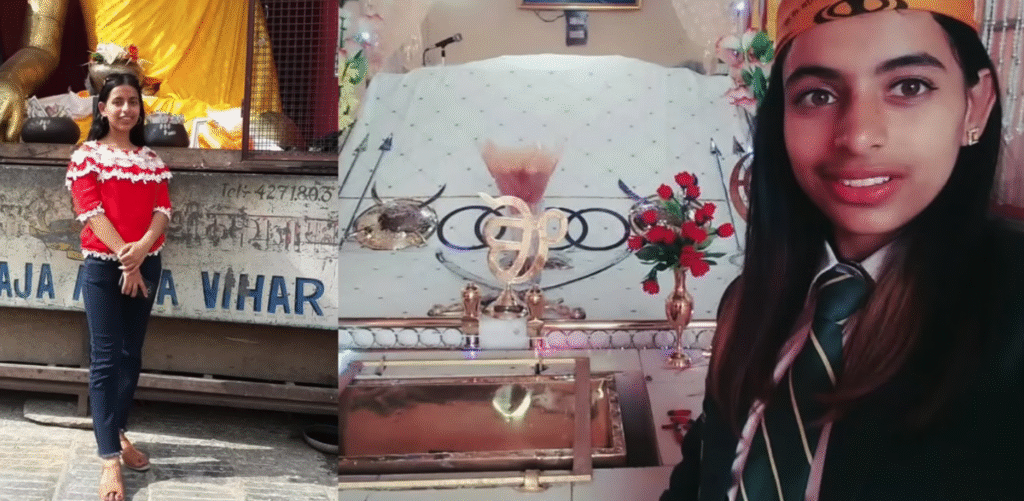
As she got older, she decided to sample Buddhism to find peace. After graduating, she threw herself into serving humanity, teaching children in an even more remote village. But she felt no peace.
Having a knack for communication, she became an intern at a media company; she did so well she got her own health program interviewing doctors from Sikkim.
“I slowly started getting little name and fame. Even though my parents were happy and proud of what I was doing, I wasn’t because I was doing all these things for inner peace,” Rashmi says. “But the more and more I tried to achieve these worldly things, the deeper and deeper I fell into depression.”
She forayed into business and making money and joined a firm in Gangtok, the capitol city and most populous urban center of Sikkim.
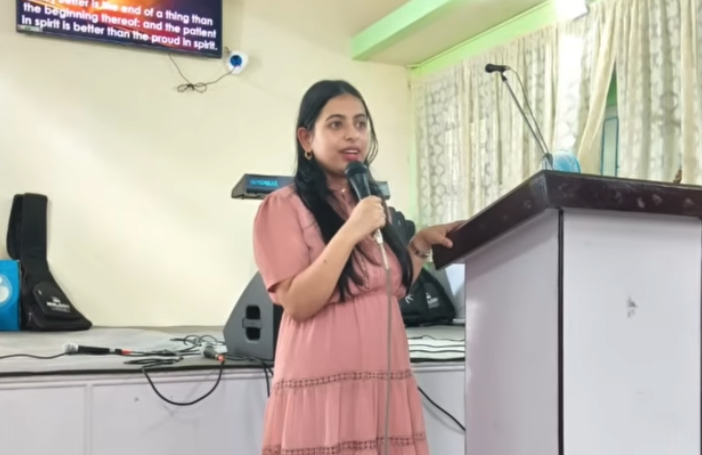
“The emptiness and the heaviness in my heart grew and slowly I fell into depression without even knowing,” Rashmi says. “I thought since the idols are not able to help me, I should help myself to gain that inner peace. In the pursuit of which I tried to achieve worldly success.
“I decided that now onwards I will stop worshiping these stone statues,” she adds. “They are nothing but stone statues. So I said to myself, now I will become an atheist and humanity will be my religion.”
As she traveled making business deals, she stayed at 5-star hotels around India. Inside she entertained ideation of suicide.
One day, as she sat across the table from a potential business partner, he suddenly stopped the business presentation and looked not Rashmi’s face but at her heart.
“I see that you are very hurt and depressed,” he told her. “You are seeking God but have not found him. Today I want to tell you that God is waiting for you with open arms. He is waiting. When will my daughter come and accept me?”

Rashmi was at once flabbergasted and piqued.
“How comes this stranger knows these things about me?” she wondered. “Who is this God of yours who knows so much about me?” she ventured to ask him.
“My God told me,” he replied and began to describe a loving and caring God that she noted was a marked contrast from the immovable and uncaring idols of Hinduism.
A voice in heart spoke: Whatever this man is saying is 100% true. The God he was talking about is the same God I had been seeking my since childhood.
“Tell me what is his name,” she again dared to engage. “I have been seeking him for so long.”
The man wrote John 3:16 on a piece of paper and gave it to her. He told her to search it on Google when she got home. “You will find all the answers to your questions,” he said.
She could hardly wait. But when she got home and searched it on her computer, she was disappointed and angered. She saw it was from the Christian Bible.
“had and loved few Christian friends “Myself becoming a Christian was impossible for me,” she recalls. “I did not like Jesus or Christianity.
But inner voice spoke up again and ratified his message.
“I was amazed that the God whom I did not even consider once turned out to be the God I was seeking,” Rashmi says.
Two words intrigued her most from John 3:16: everlasting life.
What did those words mean?
She requested to met the business associate again, and he explained that once the body dies, the soul passes into Heaven with God.
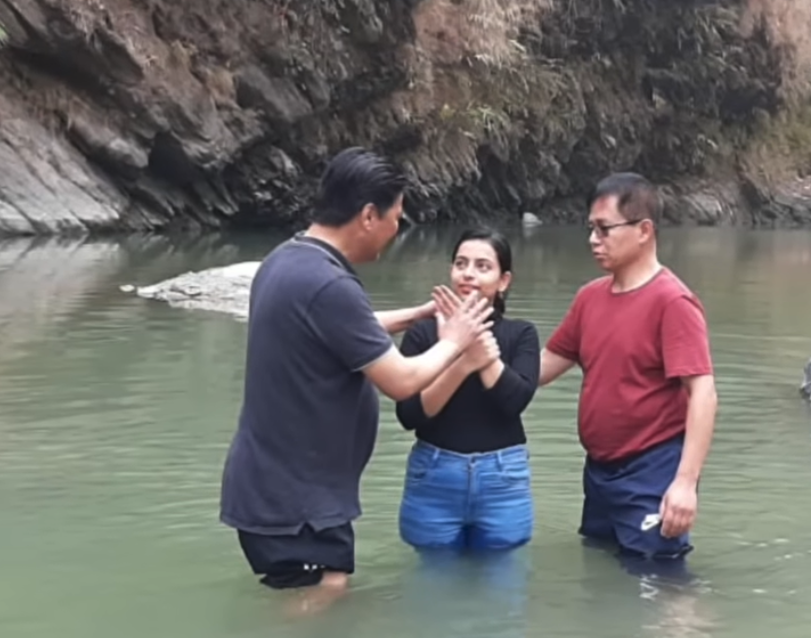
She was hooked. She began to voraciously consume the New Testament he had given her.
“The more I read the Bible, the more and more I hungered for God,” she tells. “I wanted to know him closer and closer, deeper and deeper.”
Rashmi attended church for four Sundays in row. Then Covid shutdowns spread worldwide, and she could no longer attend. She had to return to her village and her parent’s house. She returned, having accepted Jesus into her heart.
Under Covid restrictions, she read the Bible for five months in her room, and the Holy Spirit helped her understand. She began sharing the Gospel via WhatsApp. She helped others get out of depression.
Eventually, she knew she had to share faith with family, even though she knew there would be a blowback.
Indeed, it happened. Her parents were so upset that they “held” her under house arrest for three months. They wouldn’t let her be in her room, lest she read the Bible. She managed to sneak in Bible reading at 2:00 a.m. in the bathroom.
Then they brought in the village Hindu leaders who cross-examined her and accused her. Who paid you to convert? How did they brainwash you? Did the promise to make you into a pastor? They didn’t believe she had been a Christian for only six months because she spoke with wisdom and conviction.
To become a Christian “intellectual,” they said, she must have needed at least two years.
“You are calling me an intellectual,” she responded. “But I will tell you from a Bible verse what is happening here. And I told him, It is written in the Bible that God has chosen the foolish things of this world to confound the wise.”
After that all the allegations stopped. “They knew that no one had brainwashed me but the one true God had encountered me,” she explained.
Still her parents were cross. So Rashmi prayed for an opportunity to return to the capitol city Gangtok, where she could practice her conscience freely.
A job opportunity came, and God softened her mother’s heart to give her permission.
Once in Gangtok, she continued congregating in church and grew in her faith.
If originally her mother softened in her heart to let her go to Gangtok, she remained staunchly opposed to Rashmi continuing in her Christian faith. Eventually the frustration came to a head.
“Then my mother cursed me,” Rashmi says. “And she said it would have been better if you died in childhood. If you died at an early age, people would at least show some sympathy in the society. You would at least die with dignity. But you have brought a great shame and disgrace upon us. Why don’t you go to a river and just die?”
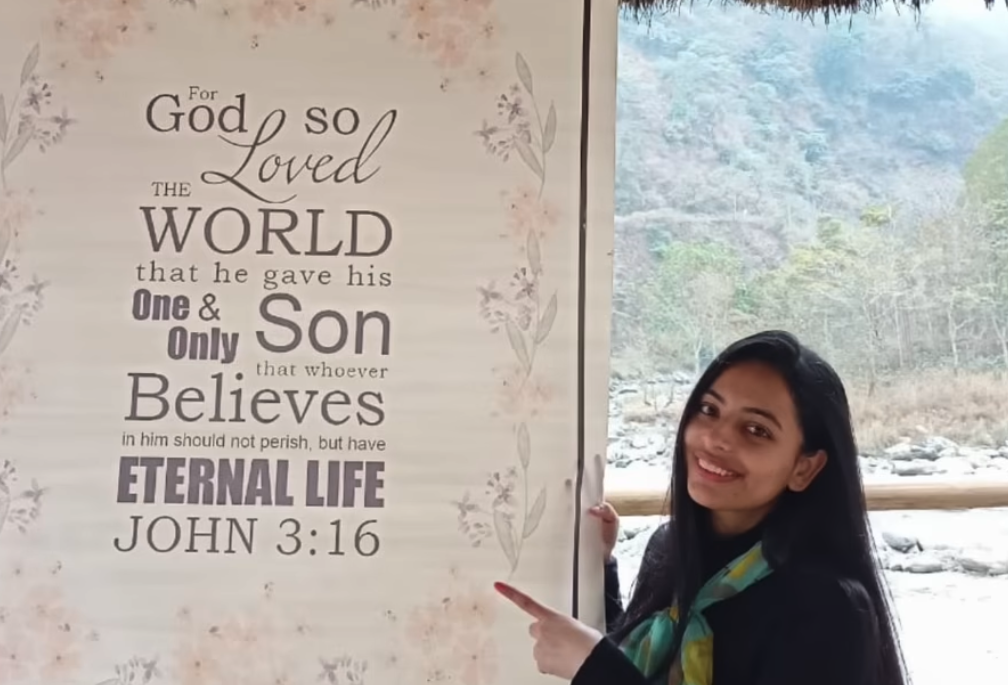
Rashmi remained unmoved. She had lost (at least temporarily) her family. But she had gained God and peace.
“In my earlier life, no matter what success I received before I knew Jesus, nothing seemed to satisfy, nothing could give me that inner peace,” Rashmi says. “But now after I had received Jesus and known him as my Lord and Savior, seven in the midst of these situations and persecution, I always had that inner peace in my heart.”

1 Comment
Pingback: Hindu idols didn’t hear, care | Mustard Seed Budget