




By Jong Ho Lee —
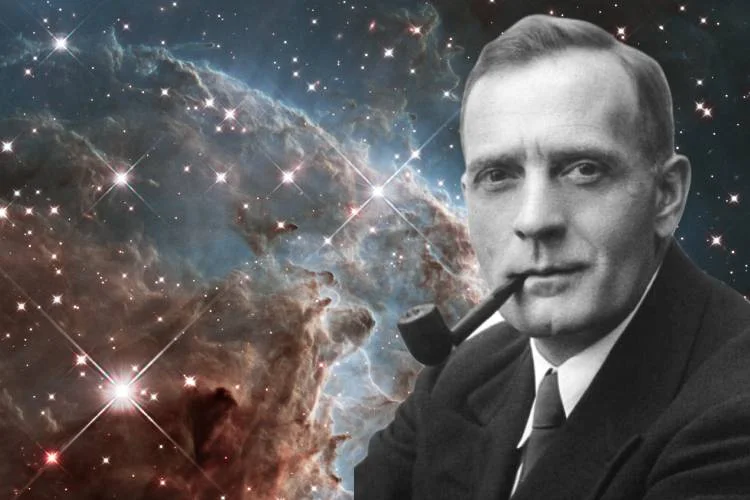
Edwin Hubble’s 1929 discovery of the expanding universe shook up Albert and the entire scientific world because it undermined their cherished notion that the universe had no beginning. If it had a beginning, there might be a Creator.
“Philosophically, the notion of a beginning of the present order is repugnant to me,” scientist Arthur Eddington said. “I should like to find a genuine loophole.”
Ultimately, the ground-breaking star-gazing Hubble did with the then-new telescope on the mountain crest overlooking Los Angeles caused so many physicists and astronomers to capitulate. The galaxy, Hubble observed, was not the totality; it was the beginning of a far vaster universe — and galaxies were moving away from each other, causing the universe to expend like an inflating balloon.
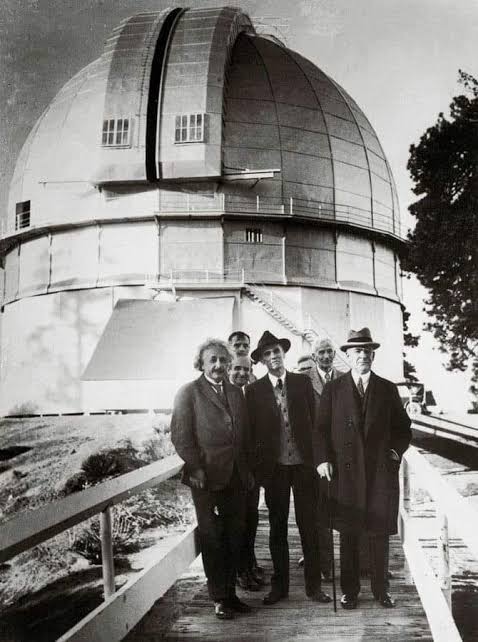
“I was wrong,” Einstein said.
If the universe was currently observed expanding, then logically in the past everything was closer together and might even have started at one point.
Nowadays, scientists do NOT use the supposed Steady State Theory, which got definitively debunked when 1965, when astronomers Arno Penzias and Robert Wilson detected the cosmic microwave background radiation theorized to have been produced by the Big Bang.
The Steady State Theory (the idea that the universe had no beginning) was used to cast doubt on faith in God. Science and faith were incompatible, it was said. But when the theory got rubbished by empirical data, scientists simply dropped it and now only talk about evolution, says scientist Stephen Meyer, a prolific scientific apologist.
“Here is evidence for what can only be described as a supernatural event,” said astrophysicist Allan Sandage, a Hubble helper and PhD student. “There is no way that this could have been predicted within the realm of physics as we know it.”
Sandage was convoked to a debate in 1985 between atheistic scientists and theists as part of the unbelieving squad. But at the Dallas conference, he sat down with the theists, leaving empty his spot with the atheists.
“This whole idea of a beginning suggests the need for an external cause beyond the material universe,” Meyer said, “There had to be something outside of the material universe.”
