




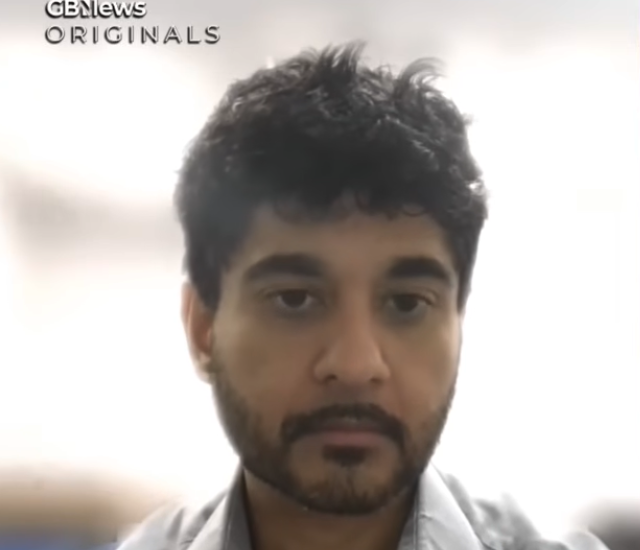
By Jackson Mefford –
At 17, Sohail Ahmed “seriously began considering engaging in an act of violence in London,” he says.
“I believed that there was a never-ending war between Muslims and non-Muslims,” he says, “and that every single non-Muslim was the avowed enemy of every Muslim who was alive. It was our god-given goal to establish an Islamic empire… This Islamic empire would then through offensive warfare annex other territories and eventually take over the world. Then the world would be living under the rule of Islam.”
Now, Sohail Ahmed works as a counter-terrorist, trying to convince others to leave extremism. But he predicts terrorism is “going to get much worse.”
When his parents got exposed to Wahhabism, they radicalized Sohail at age 6. Raised in Britain, he was taught “Britain is the enemy.”
He had autism and got bullied, which contributed to a victim mentality that solidified his move into extremism.
In college, he radicalized others, never getting to the point of advocating they engage in violence. They got there all by themselves.
“I radicalized a good few people,” he says. “One of whom eventually went on to travel to Syria to, I presume, fight for ISIS. That’s something for which I’ll never forgive myself.”
But doubts crept in, even from childhood. He was told non-Muslims weren’t true friends. But he felt his mates at school were genuine buddies.
When 9/11 happened, he was horrified. He was 10.
His parents celebrated: “See, the kuffar have been killing us, now we’re killing them.”
“Isn’t this kind of showing that maybe we’re the bad guys?” he thought. “But then I’d push that doubt to the back of my mind. It was like fear of burning in hell for questioning.”
Ultimately, questions led his de-radicalization. In 2014, he went public in an attempt to rescue others who are getting lost in extremism.
“The guilt that I have for even considering doing some (violence in London) so horrific is something that I don’t think will ever go away and I don’t think I’ll ever forgive myself for that,” Sohail says. “Because what does that say about me as a person? The fact that I was even considering engaging in essentially what’s mass murder, am I evil? Am I broken as a person? Can I even be forgiven?”
When 7/7 happened – the synchronized bombing of three London trains and one double-decker bus in 2005 that killed 52 and injured 700 – he thought of his friends. What is one of them had died in the attack?
Sohail says about half of Muslims secretly believe in violent Islam; they see the world as a clash of civilizations, Christianity against Islam.
He tries to deradicalize as many as he can but isn’t optimistic about the chances of saving Muslims in the UK.
“It’s worsening and it’s going to get worse before it gets better” because British politicians are more afraid of being called Islamophobe than seriously tackling the brewing storm, he says. “We need to grow a spine. The question is is will we do something before it’s too late? It’s better that we deal with this threat like the civilized people we are now than the univilized barbarians will have to become later down the line.”
Related content: Europe today is more Islamist than the Middle East, Guinean Archbishop warns about extremist Islam, the Australian mosque that led mass killers to shoot Jews at Bondi Beach, Source: GBNews.
