




By Bethania Wonagseged —
If you want to be defiant against the older generations in Sweden, then you become a Christian.
“You have parents, even grandparents, who are secular. So if you want to be a punk, you want to rebel, you become a believer where you have a Bible under your arm,” says Marco Stromberg of Focus Business School. “That’s the most punk thing you can do in Sweden today.”
As part of the falling away from Christian origins that affected Western Europe, only 5% of Swedes attended church as of 2000. Most members in the Church of Sweden said they didn’t even believe in Jesus as of 2011.
Things are changing.
In 2025, Swedish youth voted Jesus the influencer of the year.
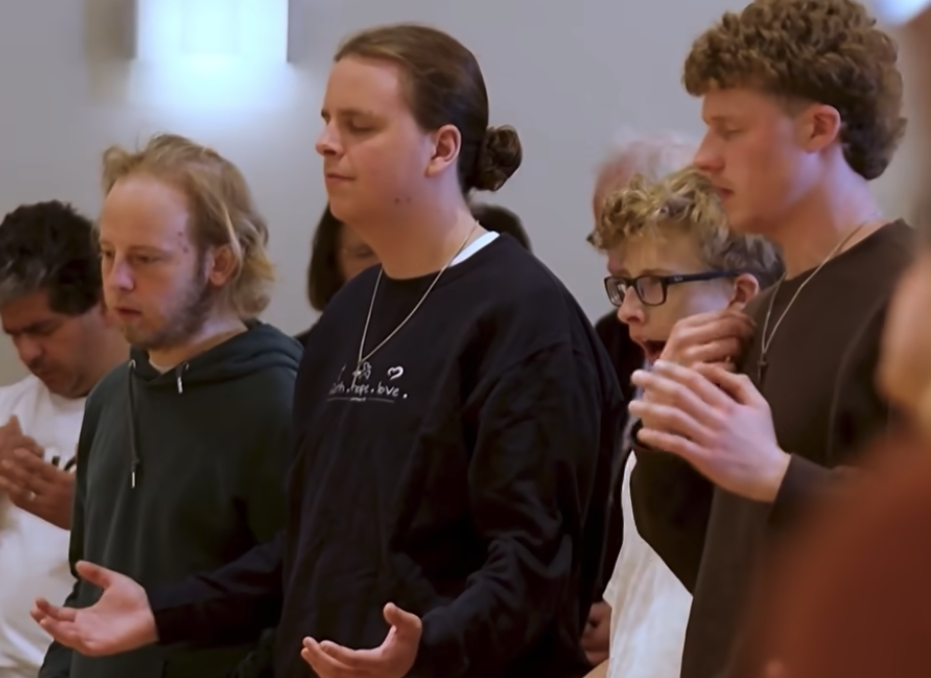
“There is such a longing for Jesus within the young generation,” says Philip Falk Azevedo, a leader of Sweden’s Jesus Conference. “People are hungry for the word of God and they want the truth. A lot of young people gathered for Jesus.”

Within its third year, the Jesus Conference registered 3,000 attendees.
One of those young people was Oscar Jakobsson, who converted to Christ out of drug addiction.
“Most of the young people are at the clubs,” Oscar says. “They get very drunk because they are trying to escape reality because they don’t see much of a meaning in life when they’re sober.”
Josef Barkenbom, a youth pastor, credits social media for fueling the flames of revival. Free from the constraints imposed by secular traditional media, people could talk openly about Jesus on social media.
“Because of social media, they can’t filter it anymore,” says Josef, who hosts a program called Why Christian? “People that have come to faith have actually come through social media.”

When the Lutheran Church offers a confirmation class, within 24 hours all spots are reserved, he adds.
“We have this ‘moral emancipation,’ that there’s no there’s no rules. You can do whatever you want,” says Marco Stromberg, whose business school teaches entrepreneurship with Christian values. “When you can do whatever you want, all of a sudden you become lost. So a lot of them are are actually seeking for traditional values: family, the church, community. Especially it’s the men.”
According the SOM Institute at the University of Gothenburg’s findings in Sept. 26, belief in God among young people jumped from 20% to 34% in four years. At the same time, youth attendance at church doubled from 17% to 34%.
Zeke Hanzen only attended church to try and pull his buddy out of church.
But he saw a vision of Jesus.
“I begin to see like a figure here. And there there it was again,” Zeke says. “When I opened my eyes the other time, I understood what I saw and felt. I just began to cry because I understood it was real.”
