




By Eden Garcia —
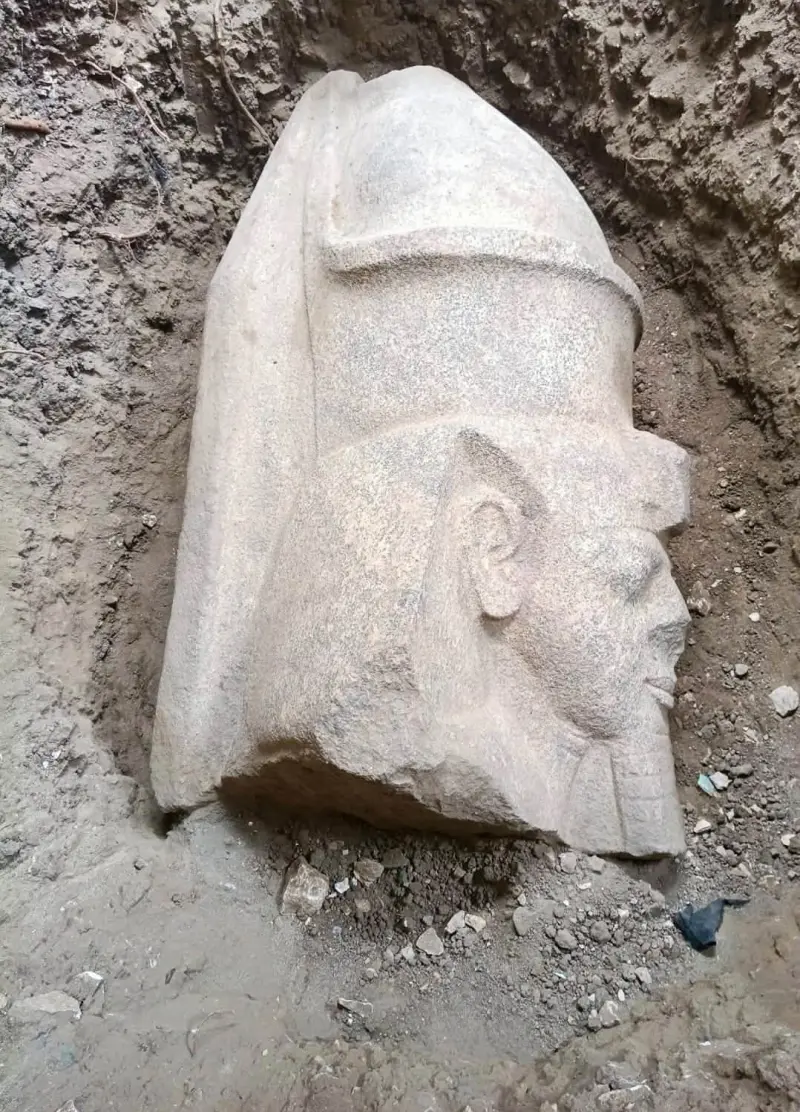
An Egyptian farmer was plowing his field, when clink the shear hit something solid. As he dug, it turned out to not be an annoying rock. It was a stature head of the pharaoh who faced off with Moses in the Bible.
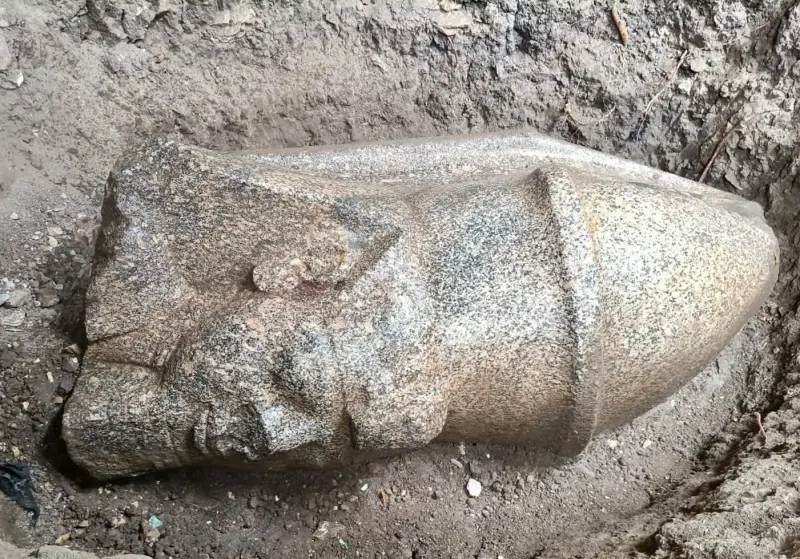
Ramses II is carved into the 5-foot-tall head unearthed Behbeit El Hagar, in Gharbia province, by archaeologists when the farmer alerted the Supreme Council of Antiquities of Egypt of the accidentally discovery, the Egyptian Gazette reported.
The head likely belonged to a 27-foot tall statue of the once king of Upper and Lower Egypt.
At the same site, diggers found a second, 8-foot-tall statue of the dignitary and a 4-foot-high block of pink granite containing fragments of hieroglyphic inscriptions proclaiming the pharaoh “Nesu Beti,” King of Upper and Lower Egypt, and “Sa Ra”, meaning Son of Ra.
Born in 1303 BC, Ramses II is widely considered one of the most influential and powerful Egyptian kings of Egypt’s New Kingdom era (1570 to circa 1069 B.C.). He’s believed to be the king who lost to Moses in the struggle to keep Israelite slaves from leaving Egypt.
Sherif Fathy, Egypt’s Minister of Tourism and Antiquities, predicted that the findings will throw a greater light on this region of the Nile Delta, which was a political, cultural and economic stronghold in ancient Egypt.
Source: New York Daily News.
