





By Milo Haskour —
Churches once filled by denominational loyalty now sit half-quiet, their pews thinning year by year. Gobbling up the memberships is the phenomenon of the megachurch, which draws consumerist believers and titillates them with Grammy quality worship, stagecraft, choreography and motivational charismatic talk that passes off as a sermon. The church becomes a corporation and an empire.
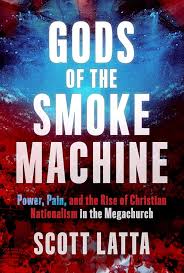
That is what Scott Latta’s 2024 book Gods of the Smoke Machine is about. It’s a longform nonfiction based on years of interviews with megachurch pastors and staff and reveals how pressure to grow relies on marketing strategies, how staff burn out and how pastors operate behind the curtains unaccountable to anyone. Spectacle can sometimes overshadow substance, turning the search for meaning into a commodity marketed and sold at scale. Reports of abuse, secrecy and trauma are surfacing with every day, revealing a pattern of unchecked authority within an institution largely shielded from external oversight.
To understand the rise of megachurches, one must first understand their appeal. In an age dominated by convenience and curated experiences, megachurches promise a seamless encounter with faith. Worship resembles a concert, teaching resembles a TED Talk and community resembles a well-run brand. These churches offer clarity in a world of chaos, belonging in a time of loneliness and purpose in a culture hungry for meaning.
Yet that very appeal can mask vulnerabilities. The larger a church grows (a mega is classified as 2,000+ Sunday attendance), the more its power concentrates in the hands of a few. Boards often lack independence. Elders frequently serve at the pleasure of the pastor. Entire campuses are organized around a single charismatic personality whose instincts and decisions can shape the lives of thousands.
This structure may produce efficiency, but it also produces risk. Latta’s reporting shows how megachurch systems can become insular, protecting leaders while leaving victims without recourse. With more than 1,750 megachurches nationwide, the consequences are vast.
Latta’s book lifts the veil on stories that rarely make it to the stage. Survivors describe environments where questioning leadership meant betrayal, where reporting misconduct risked exile and where personal suffering was treated as a threat to the brand.
Some of these stories involve emotional manipulation. Others involve financial abuses. Still others involve sexual misconduct by pastors who operated without real accountability. Attorneys and advocates who work with victims describe a landscape where internal investigations are handled quietly and where public relations teams prepare statements long before justice is pursued.
Latta sits with the wounded, the disillusioned and the ones still fighting to regain their spiritual footing. What emerges is a portrait of a movement that built immense platforms but struggled to build structures of care.
Despite the institutional critique, the book is not a broadside against faith. It is a human story — one of people drawn by hope, wounded by power and struggling to reclaim a sense of spiritual identity. Latta’s reporting highlights resilience among survivors who seek justice not because they hate the church but because they loved it enough to expect better.
He documents a movement that rose on the promise of authenticity yet often punished honesty. A movement that claimed community yet sometimes silenced the vulnerable. A movement that preached freedom yet relied on control.

And yet he also shows the courage of advocates who resist the machine, attorneys who refuse to back down and former insiders who speak out because silence can no longer bear the weight of what they endured.
When you go to a megachurch, you get quality of ministry and diversity of groups for individual needs. The tradeoff is often meaningful relationship and true discipleship.
