




By Abdul Masih —
In the battle for souls between Islam and Christianity, the Muslims used to argue powerfully that while the Bible had many versions and various textual discrepancies, the Koran had been “perfectly preserved” by Allah and that there was only one version. Not a letter, not a dot had changed.
This was persuasive because it showed that Allah was involved in preserving his scriptures. Doubt was cast on Christianity because God had been unable to perfectly preserve the Bible and Christians acknowledged it.
There was just one problem. It wasn’t true. In fact, there are at least 37 versions of the Koran that you can still purchase in different parts of the world. And there are lots of textual discrepancies. And after lying about this for decades, the Islam pushers — known as dawah guys — finally conceded five years ago.
The house of cards came tumbling down on June 8, 2020 — a day that Christian apologists call “Holes in the Narrative Day.”
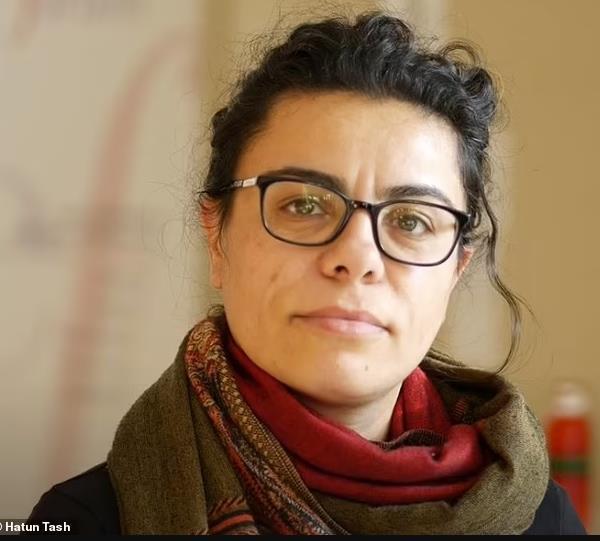
On June 8, 2020, a respected Islamic scholar from Texas, Yasir Qadhi, on a live YouTube interview with UK dawah guy Mohammed Hijab, when pressed about the right and true version of the Koran, when pressed to account for perplexing differences in textual readings, declared that there is no good answer and that all attempts at sustaining the doctrine of perfect preservation ultimately fail.
“It’s very clear that the standard narrative has holes in it,” declared the Yale University PhD scholar. “The standard narrative does not answer some very pressing questions.
“This is a very, very difficult issue,” Qadhi added. “The most advanced of our scholars are not quite fully certain how to solve all the unanswered issues raised by non-Muslim scholars. It is an awkward and difficult issue. When you go to academia, they bring issues that you know are true because they go to our own books. They view us as the ‘Emperor with no Clothes.’”
The most astonishing thing was his openness, on YouTube. He essentially undercut decades of Islamic proselytizing. Muslims reportedly began commenting on the video that they would abandon Islam. The video was eventually taken down by both Qadhi and Hijab. But Christians had downloaded it and re-uploaded it all over the internet.
Dawah guys got mad at Qadhi. Their lies had been exposed by one of their own. They directed their followers to distrust Qadhi. They questioned Qadhi’s Islam. They cast him out, trampled him, tarred and feathered him and ran him out of town on a rail.
It became a shark feeding frenzy.
The person who prompted the uproar with a 5’2″ woman from Turkey. Hatun Tash came to England and visited a church, just like tourists in her native land visit churches. What she heard unnerved her: the Christian story of Christ was very different than the Koran’s story of Christ (in the Koran, he didn’t die on a cross).
The puzzling discrepancies prompted her to read about the life of Mohammad. She was horrified. He was a slave trader. He had married a 9-year-old. And so on.
She became a Christian and studied deeper comparative religion.
Hatun became a fixture of reaching out to Muslims at Speaker’s Corner of Hyde Park in London, where once upon a time, masses of Muslims bowed to pray. Speaker’s Corner is the best place to joust Christian vs. Muslim.
When Christian apologists said “there are more than one version of the Koran,” the dawah guys had one response: “You’re a liar.”
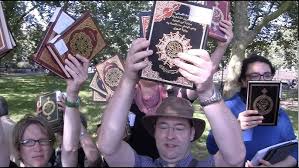
So Hatun traveled the world, from Yemen to Morocco, and bought old bound volumes of the Koran. It was a great expense for her, but at the end of the day, Hatun acquired 37 different Korans.
She and her cohorts brought them all to Speaker’s Corner and held them high, which highlighted enlarged textual differences on some of the pages.
The dawah guys were exposed. They frantically gestured for Muslims to turn away from listening to the Christians.
There was no more lying. They eventually had to account for the 37 versions. To this end, Mohammed Hijab reached out to his buddy Yasir Qadhi. But he didn’t do it privately. He did it live on his YouTube channel.
The funny thing about that interview is that one gets the impression that Yasir Qadhi doesn’t want to discuss the truth on the channel. A couple of times, he cautions Hijab not to ask about those questions publicly.
“I would never bring it up in public,” Qadhi tells Hijab, bringing it up in public. “This is not something you discuss amongst the masses… It’s not wise.”
But Hijab appears to press him, and Qadhi appears to break down and stay true to his scholarship, even when it undermined the public perception of the so-called “perfect preservation of the Koran.”
And that is how, on Holes in the Narrative Day on June 8, 2020, Muslims lost one of their most powerful arguments in the search for converts and in the quest to retain Muslims.
(Now, their most powerful debating point is the Trinity. How can three be one, etc.?)
And the Koran? Well, now instead of being a holy text, it is a holey text.
Related content: Strange that Mohammad’s bio comes from Germany, Muslims dream about Jesus, Megiddo mosaic proves the doctrine started a lot earlier than Muslims want to admit.

4 Comments
Pingback: What the fall of Mohammed Hijab reveals about Islam – Pilgrim Dispatch News
Pingback: Did Mohammad even exist? Ancient documents leave scholars wondering – Pilgrim Dispatch News
Pingback: Guilt-mongering in universities – Pilgrim Dispatch News
Pingback: ‘Ayatollah’s death spells the end of Islam’ – Pilgrim Dispatch News