




By Caleb Campos —
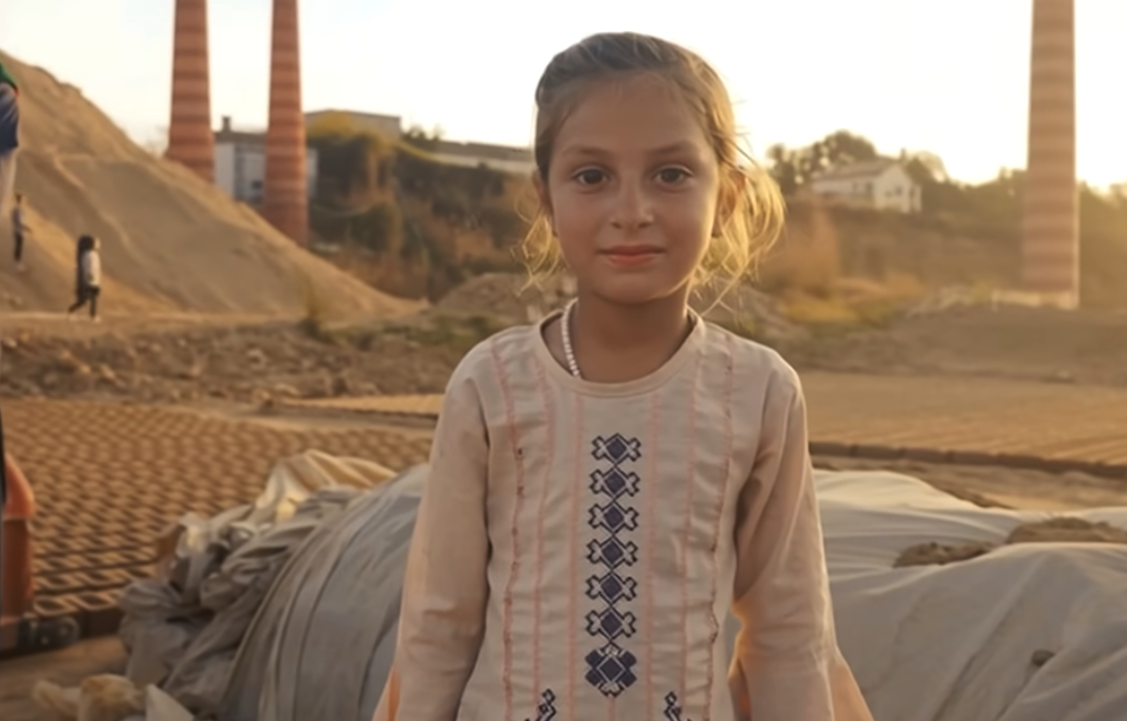
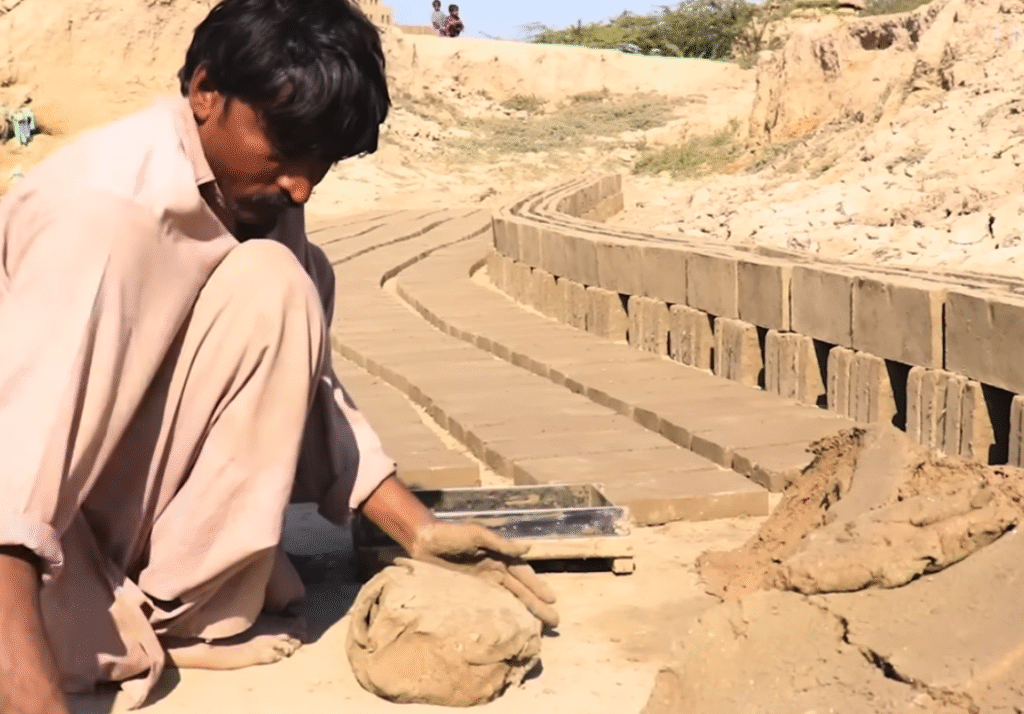
Poonjo Meghwar borrowed money to pay a hospital bill 23 years ago, agreeing to pay off the debt by working in the lender’s brickyard in Pakistan. Being illiterate, he “signed” with his thumbprint.
Today, Poonjo, his mother, wife and son are still paying off the loan. For a crushing quota of 1,500 bricks a day, they get paid $3, half of which is used supposedly to make payments on the loan. The interest on loan is a mysterious calculation, unregulated by the government, making them essentially permanent bond servants.
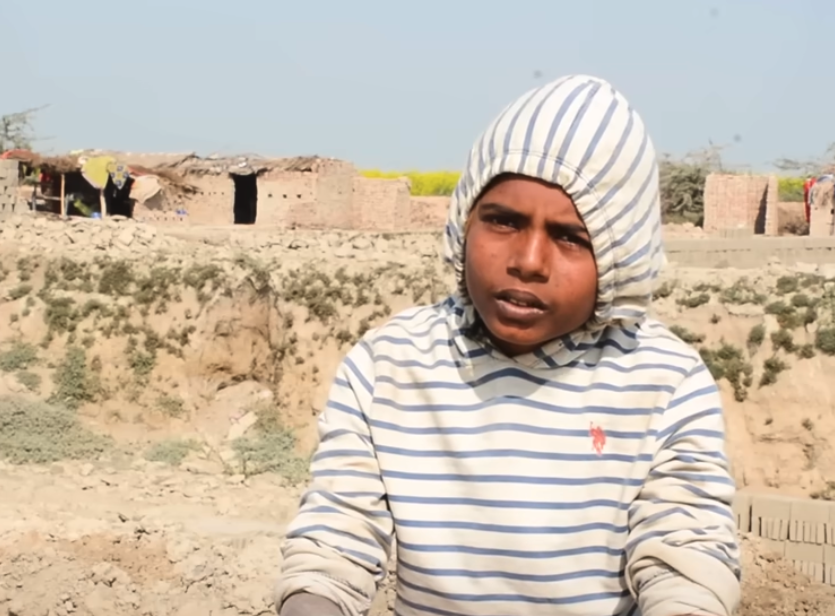
“I don’t remember life before the brickyard,” says his son Dileep, who is 12. “I have not thought about the future. I’m sad that I don’t go to school. I can’t read or write. We had to take a loan, so here we are stuck. It’s our fate to work this job.”
Roughly, 4.5M Pakistanis are trapped by exploitative loans in the 20,000 brickyards that dot the landscape. The debt gets passed on generationally. Once you get into the brickyard, basically you will never get out –and your kids will never get out.
Pakistani laws prohibit these predatory loans, but policing is non-existent. The large landowners constitute a mafia, says Joseph Janssen, an activist who fled Pakistan after his sister was put on death row under false accusation of blasphemy. At least part of the reason why the authorities won’t crack down on the brick yard owners is because they’re Muslim, and the bond servant peasant brick makers are religious minorities, mostly Christians. In Islam, the Christian is a second class citizen.
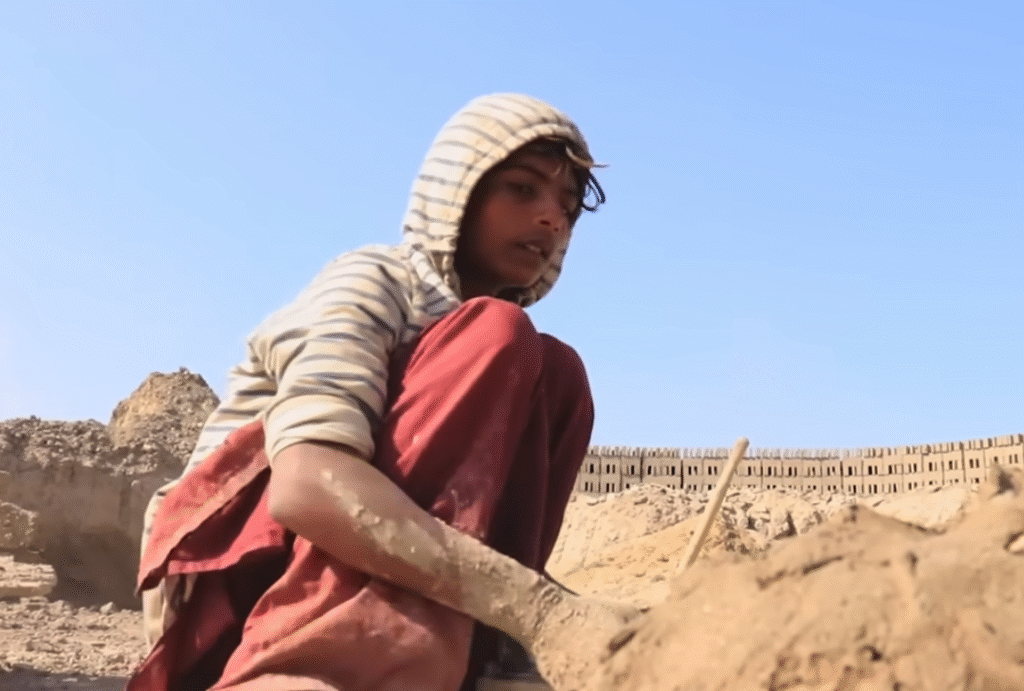
“What people are doing there is like the Isrealites in Egypt,” Jansesen says. “They are making bricks and they are in a horrible situation. I have seen people are in slavery from generations to generation, bonded slavery.”
Poonjo and his family are not Christian. They are Hindu, just as oppressed as the Christians.
His family of five lives in a ramshackle brick structure with a makeshift roof and a separate tent.
Compounding interest is not the only factor conspiring against them. During the monsoon season when they can’t work, they have to borrow money for food.
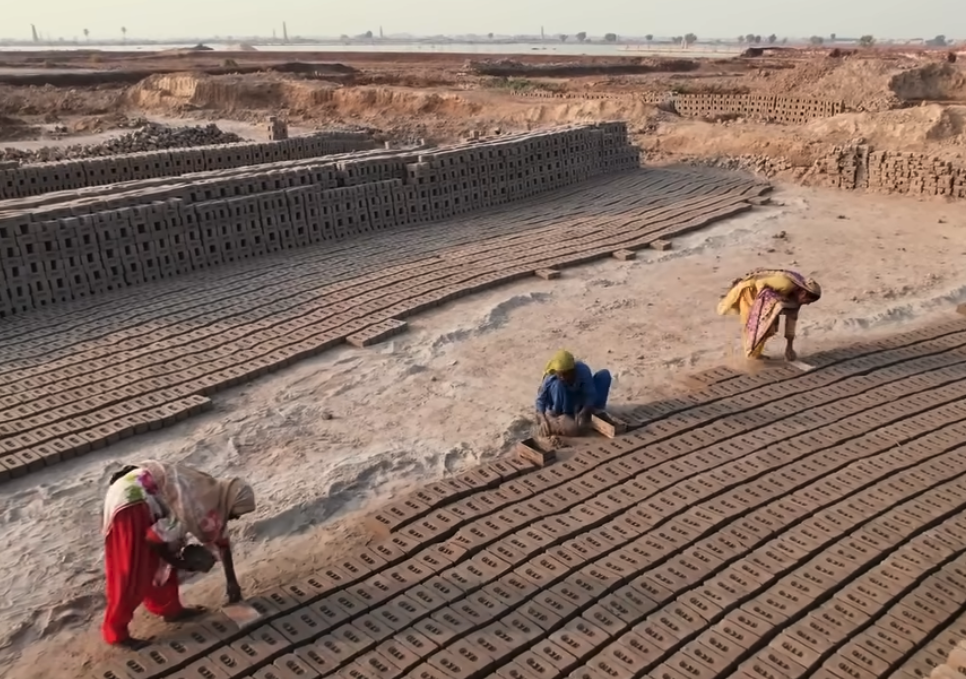
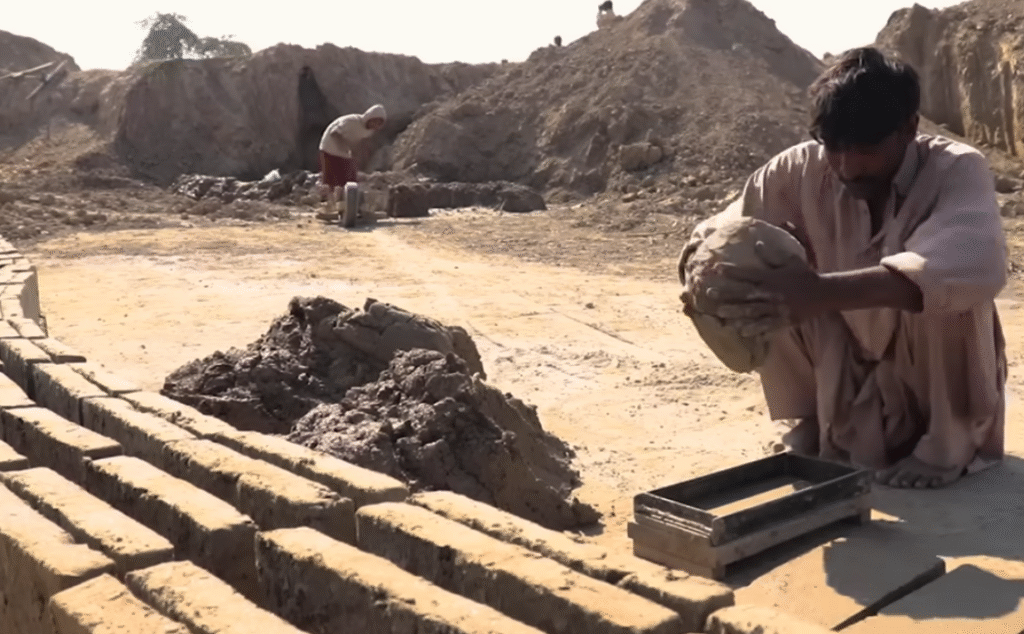
Poonjo thinks he still owes $500 on his loan. His weekly production is sold for that amount of money.
Dileep started working in the brickyard when he was 7. “My hands hurt,” he says per translated. “My back hurts from squatting for a long time. Sometimes I feel pain in my legs and arms too.”
They work up to 18 hours a day, survive on scant food and eke out a subsistence. But they smile too and enjoy life and love. Since they don’t have a schedule (just a quota), they can take breaks and play cricket. What is astonishing in the brickyards is not the misery but the human joy despite the misery.
You may also like: Hindu with a knife ready to kill at Christian meeting instead becomes a Christian, an 11-year-old girl forced to convert due to kidnapping/wedding gets restored to her family many years later, Pakistan makes Christmas an official holiday after decades. Sources: Business Insider, Back to Jerusalem podcast with Eugene Bach, RocaNews, others.

2 Comments
Pingback: Heartbreak: Kids born in Pakistani brickyards never make it out | Mustard Seed Budget
Pingback: Blasphemy laws used for vendettas in Pakistan – Pilgrim Dispatch News