




By David Reda –
In October 2020, 2,100 Japanese committed suicide during in that one month alone – more than people who died of COVID in Japan during the whole year.
“Many people are taking their own precious lives. We have to take this reality seriously,” said Katsunobu Kato, then Japan’s chief cabinet secretary. “Each of us must work to create a society without suicide. Not only journalists but communities and relatives should watch carefully and listen, so that those who are struggling do not become isolated.”
The staggering statistics reveal a broken Japanese society. Japan, which has been resistant to the Gospel, may offer an opening through its high-stress, honor system that breaks down for many Japanese. An estimated 1.5M stay in the rooms, withdrawn from a society because they feel they can’t live up to expectations. They are called the hikikomori, or “shut ins.”
“A broken world was healed by a broken Christ on a broken tree,” wrote Roger Lowther in The Broken Leaf, a group of essays that suggests that art can aid the spread of the Gospel by helping the existential loneliness and pain of so many Japanese.
At most, 2% of the population is Christian. The Gospel has largely failed to penetrate the Eastern nation because:
- Christianity is viewed as foreign
- Group harmony outweighs individual believe
- Historical trauma still echoes
- Material stability reduces perceived need
- Churches have stayed overly Western and disconnected from Japanese aesthetics and meaning
Roger Lowther suggests that the straightforward verbal message of the Gospel might not be the best entry point. A better one would be through art, which sounds the heart of the nation through symbol and pathos.
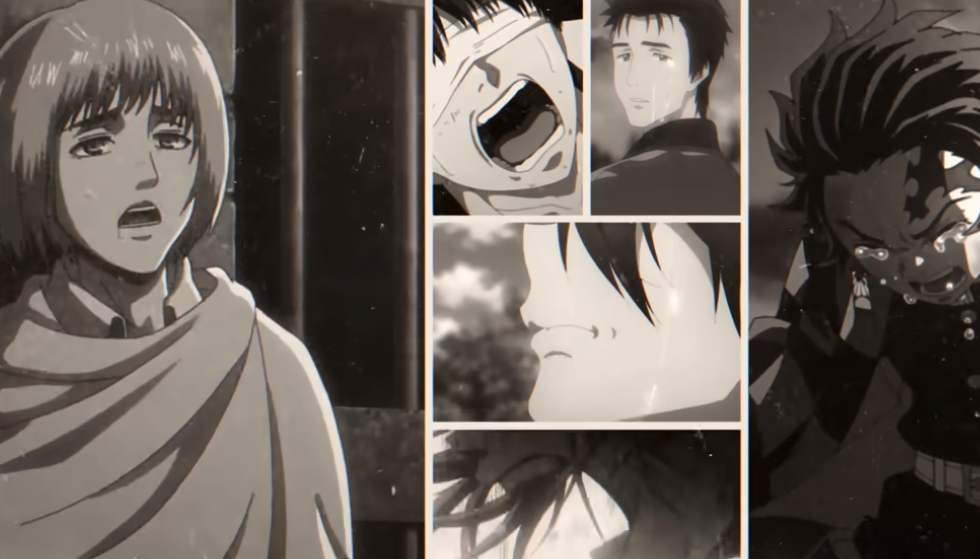
Take anime for example.
“Many anime series explore complex themes around pain and suffering,” says Steven Morales of the Radical series on YouTube. “As is the case with most art, a lot of Japanese art is born out of struggle, loss and hurt, and Japan is no stranger to hurt.”
There was the Hiroshima and Nagasaki atomic bombs and the 8.9 magnitude earthquake of March 2011 whose resulting tsunami destroyed the Fukushima nuclear reactors, unleashing fatal radiation in a 12-mile radius.
Aside from the outside pressures, there are internal pressures: an intense honor culture that imposes shame when you don’t measure up. Among young adults and adolescents, suicide is a leading cause of death in Japan — a phenomenon less common in other wealthy nations.
Ayaka has found release of the pain of her life through Christ. When her husband’s decade of infidelity came to light, it crushed her. Today, she paints by crushing minerals to make the whitest paint.
“My art teacher says, ‘You never never paint something to conquer the subject. Come under what you’re painting, and your art will always be better,’” Ayaka tells. “It’s like reading the Scripture. We want to come under the word of God. I find that this process of crushing feels like a worship because a contrite spirit God doesn’t despise.”
The “colors left my eyes and I couldn’t paint anymore,” she recalls of the shock when she discovered her husband’s lies. When she came back to painting, she “washed off” the color of a previous painting to re-do it painting blue on top. The results astounded her teacher.
“It’s almost like God sees my grief, and even though I try to cover it, it’s still there,” Ayaka says.
The pain of Jesus helps the pain of the people.
