




By Caleb Campos —
People of faith overcome addictions and grief easier than people who have no faith.
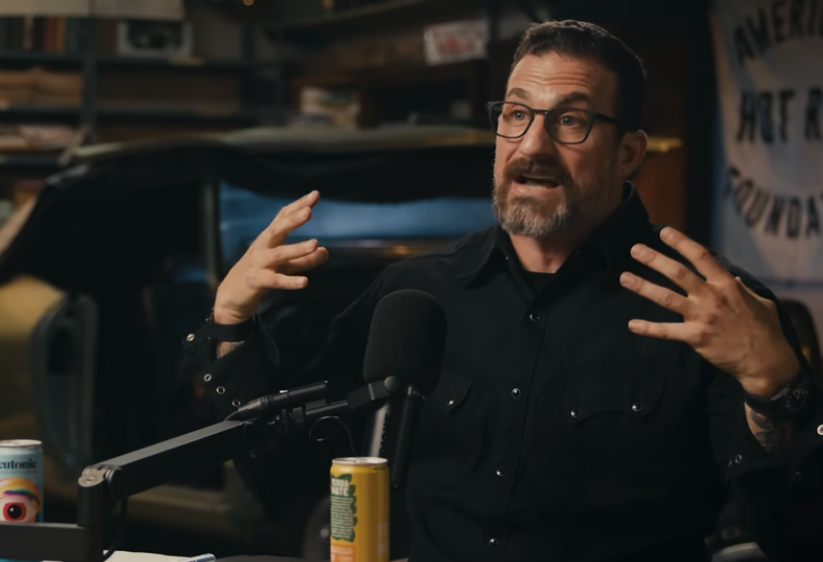
So says Andrew Huberman, associate professor of neurobiology and ophthalmology at the Stanford University School of Medicine.
“When we’re talking about breaking bad habits, overcoming immensely difficult scenarios that normally would throw people into complete self-destruction, when people hand that over to God, it seems as if they get some relief from the process,” Huberman said. “It’s very effective.”
Normally the scientists like Huberman don’t get into speculations about faith. They’re too busy with the hard science of neural structures and neural circuits. This has led to a gap in studies. Sociologists report that faith helps clinically, but science can’t explain why.
“If you look at the science around religious belief or the notion that humans don’t have all the answers what you find is that for everything from recovery from addiction to recovery from immense immense loss like the death of a family member,” Huberman says, “if people move through that with any kind of self-preservation and not engaging in just self-destruction (which is what most people do), almost always it involves some notion of top-down control from outside.”
Basically, this is the success formula of Alcoholics Anonymous. Step #1: We are powerless to overcome addiction. Step #2: We relinquish control to a Higher Power.
“Neuroscience doesn’t really understand,” he says.
Because of his own observations connecting faith to recovery, Huberman himself has become a man of prayer. He doesn’t miss it nightly.
“There are too many burdens in life for anyone to be able to navigate life extremely well without these notions of higher power,” he says. “I stopped fighting so hard to try and control everything inside me and in my life. As a consequence, everything has become much easier — still challenging but much much easier. And it’s 100% because of giving over to notion of higher power.”

1 Comment
Pingback: Science: Faith helps overcome addiction, grief | Mustard Seed Budget