




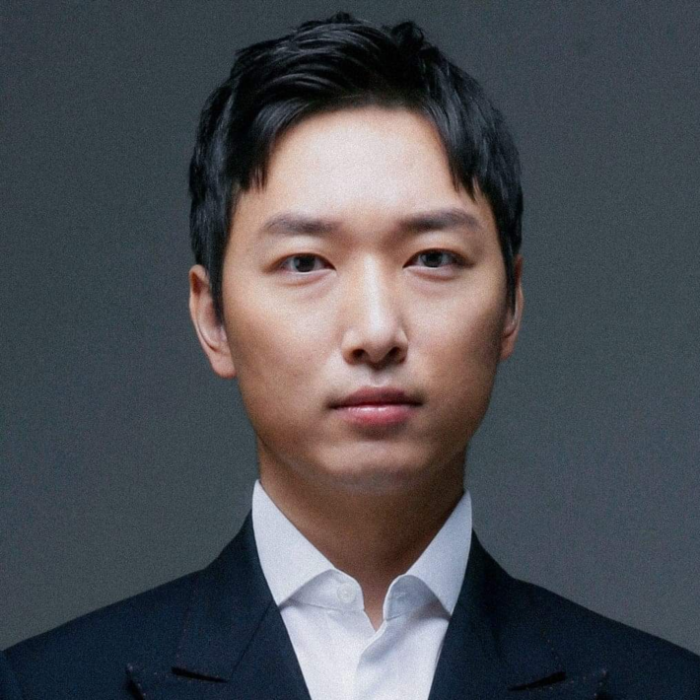
Swatting the notion that intelligent people don’t believe in God, the world’s smartest person, Younghoon Kim, with a confirmed IG of 276, just proclaimed that “Jesus Christ is God,” saying that consciousness is data that quantum science assures never disappears.
“Science says that when the brain stops, then our consciousness disappears,” the South Korean man says. “But quantum physics says that information never disappears. Never. It only changes in form. If our consciousness is quantum information, it may continue after the body is gone. For example, like computer data is stored in the cloud, our consciousness may not be trapped in the brain. Quantum entanglement suggests that our consciousness is part of a bigger system beyond the physical world.
“Science is growing now, and we are learning more about consciousness and reality,” he adds. “Our death is not destruction, but change and shift. Humanity will keep searching for the truth about what comes after.”
Just Tuesday, he tweeted on X: “As the world’s highest IQ record holder, I believe that Jesus Christ is God, the way and the truth and the life.”
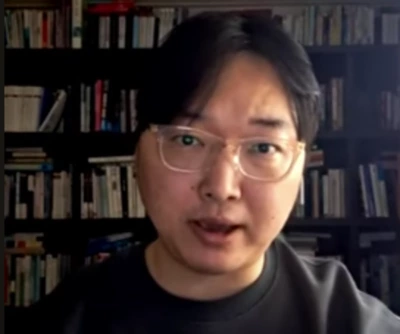
Dr. Kim is the founder of the United Sigma Intelligence Association, which he explains is a non-profit group of more than 100 intelligent individuals around the world, including professors from top universities Harvard, Yale and Princeton. “I want to research and help improve people’s brainpower around the world using my talents in the future,” he says.
His intelligence has been tested and verified by different agencies: World Memory Sports Council, World Memory Championships, World Speed Reading Championships, World Mind Mapping Championships, GIGA Society, Supertalent World Record & Supertalent of the World, Korea Masterpiece & Master Certification Committee, Challenge Korea Headquarters, Korea Best Record Institute, Korea Record Institute, World Genius Directory, Global Genius Registry, Esoteriq Society, Ultima Society & Nano Society.
Younghoon Kim is a postdoctoral associate in the Department of Statistics and Data Science (SDS) at Cornell University. He received his doctoral degree in Statistics and Operations Research at the University of North Carolina at Chapel Hill. His research interest includes modeling high-dimensional time series and spatial fields, computational statistics for large-scale problems, and applications in psychology, neuroscience, finance, and biomedical engineering.
