





By Shayla Papik —
The more the Islamic clerics in power pushed for full and complete submission to make the Islamic utopia, the more the Iranian people became disenchanted and disengaged.
A new leaked Iranian government report found that a astonishing 73% of Iranians now support the separation of religion from state, a significant leap from less than 31% in 2015. Only 11% regularly engage in congregational prayers, while 45% have never attended Friday prayers.
“On a government-led poll, that is insane,” says Armin Navabi, of Atheist Republic. “In one of the last theocracies on the planet, in a religious government, 73% says they want secular government. That is a high number.”

The survey was conducted by the Islamic Republic’s Ministry of Culture and Islamic Guidance and was meant to be confidential for Iran’s leader’s eyes only. But it got leaked.
Already, Iranians felt stifled. They opposed the mandatory hijab and were deserting mosques in mass. In 2023, two-thirds of mosques had closed due to lack of attendance.
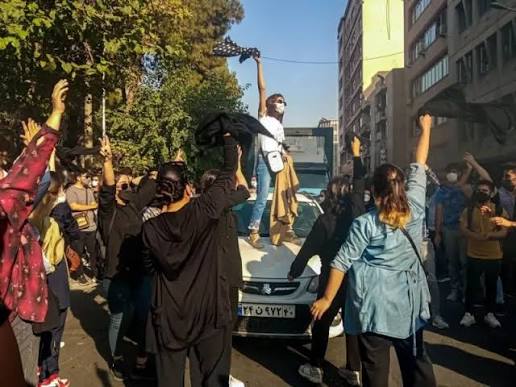
Then the uprising in January saw protesters burning mosques because they’re also centers of government action against the people.
When the clerics were the revolution in 1979, Iranians supported them. But when they took over, they institutionalized. A new revolution of the people began brewing of the people against the Iranian Revolutionary Guard.
The leaked survey confirms and broadens data from GAMAAN in 2020 (conducted by outsiders) that found that only 32.2% identified as Shiite Muslim, while 22.2% chose “none,” 8.8% atheist, 7.7% Zoroastrian, 7.1% spiritual and 5.8% agnostic.
Most strikingly, 46.8% said they had gone from being religious to nonreligious during their lifetime. The survey also found that 68% believed religious prescriptions should be excluded from law.
“Broadly speaking, this (GAMAAN) survey puts data (shows) that Iranian society is exceptionally less religious” than shown on Iran’s official statistics which claim 99.5% Shia Muslim, said Behnam ben Taleblu, of Foundation for the Defense of Democracies.
Here’s the progression: loss of religious belief/clerical authority → rejection of compulsory Islamic behavior → civil disobedience → rejection of the Islamic political system.
The paradox is striking: the 1979 revolution created one of the world’s most explicitly Islamic states, yet four decades later Iran appears to have undergone unusually rapid religious disaffiliation.
