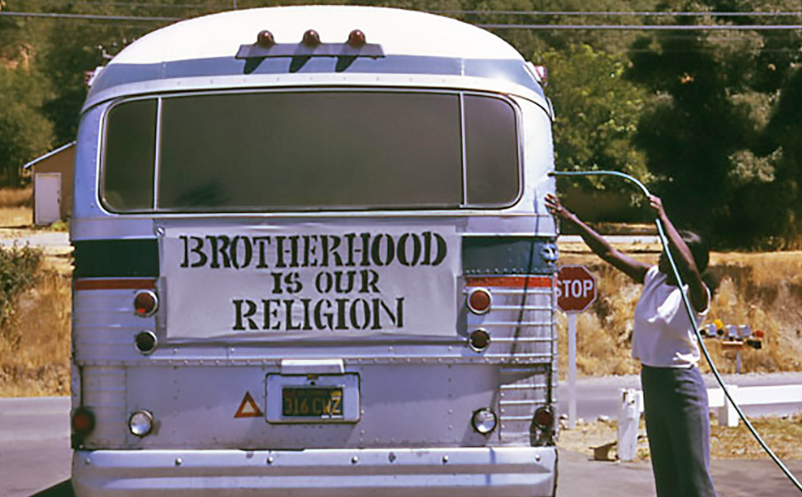
“The white man made the Bible his book to justify all the evil he did to the black man." -Rev. Jim Jones Peoples Temple founder/former San Francisco Housing Commissioner
In our present season of partisan finger-pointing over how notorious pedophile Jeffrey Epstein gained access to so many important people in government and business, it is tempting for many in the corporate legacy media to gasp that this type of thing hasn’t happened before. For what are we to make of the peculiar courtship between San Francisco’s ruling establishment and the Reverend Jim Jones? I am old enough to remember the late 1970’s as a young child; my family actually lived in San Francisco during Jim Jones’ tenure as housing commissioner.
What always amazes me, however, is how many people alive in that era (whether conservative Christian or secular or other) consistently remember Jim Jones as some type of evangelical preacher who somehow went mad one night and ordered his followers to drink cyanide Kool-Aid.
Only Jones was no such preacher. His cult’s name, The People’s Temple is a big hint as to Jones’ spiritual hierarchy. And then many modern people fail to consider how any run-of-the-mill “Bible thumping” preacher could be so popular among San Francisco’s radical elite circles in the late ‘60’s and into the 1970’s.
To be sure, Jones began as an evangelical minister from Indiana- before he discarded his Bibles as “garbage,” and then literally claimed Marx’s Communist Manifesto as his spiritual roadmap. But more on that in a minute.
Yet here was San Francisco, a city that prides itself on its sophistication, welcoming Jones as both moral exemplar and political partner. Jones was the original “ally” of racialist and far left causes and a trailblazer of what is now called “virtue signaling”.
The embrace of a cruel nihilist like Jim Jones by the Northern California Democratic Party was not subtle. The pursuit of power made Jones and the insurgent New Left of post-1960’s San Francisco into mutually dependent fellow travelers. The Democrat establishment could confer easy legitimacy on Jones – which worked to discredited the mounting number of detractors who rang the alarms against the excesses of Jones and his Peoples Temple.
In return, the Peoples Temple could mobilize hundreds of disciplined volunteers for Democrat phone banks, rallies, and election campaigns. That organizational muscle won Jones an audience with liberal icons such as Harvey Milk, Willie Brown, Jerry Brown, and even former First Lady Rosalynn Carter, who even praised his devotion to liberal values from the pulpit of Jones’ church. To these (then) rising Democrats, Jones appeared to embody social justice: interracial and gay inclusion, fervent equity-themed rhetoric and tireless public service and charitable projects. What was overlooked, or perhaps willfully ignored, was the Maoist/Stalinist authoritarian core of his ministry. Staged faith healings, financial fraud, coercion, sexual exploitation, and the cult of personality were always there for anyone willing to see them.

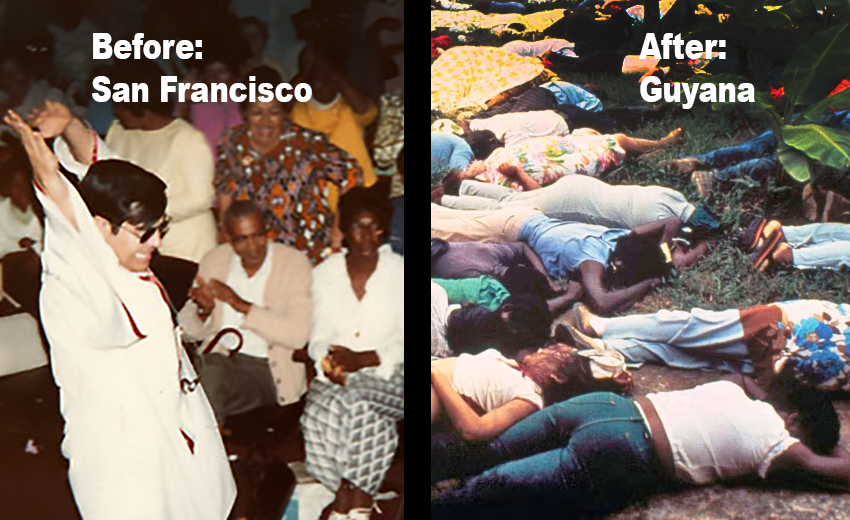
The end finally came in late 1978 when more than 900 followers, most of them Black, were compelled to drink cyanide-laced poison at the Peoples Temple commune in a Guyanese jungle. The final act came only after California Congressman Leo Ryan, responding to years of complaints that had been ignored in San Francisco’s Democrat establishment, was gunned down on Jones’s orders at a remote airstrip. It was the conclusion to a long story of political favoritism and willful blindness that allowed a homicidal cult leader to stay one step ahead of scrutiny. This story is more relevant than ever as the San Francisco Democratic Party in effect runs the state of California and has exerted enormous influence in Washington D.C. – San Francisco pols like Nancy Pelosi, Eric Swalwell, Kamala Harris, Dianne Feinstein and Gavin Newsom come to mind.
But here is what the Church-bashing progressives would have you forget:
During a 1970’s sermon to his gathered parishioners at the Peoples Temple headquarters, Jim Jones held up a Bible during the service, read select passages to highlight what he called its contradictions and hypocrisies and then dramatically dropped it into a nearby trash can. Jones is then quoted as saying “This is where it belongs—the garbage can of history!” as Jones’ congregation erupted in applause. Later on Jone would claim he was the reincarnation of Christ and Buddha and he admitted that his ministry’s goal all along was communism.
This rhetoric aligned with Jones’ emphasis on “apostolic socialism,” where he positioned himself and concerns for social equality as morally superior to the authority of Scripture.
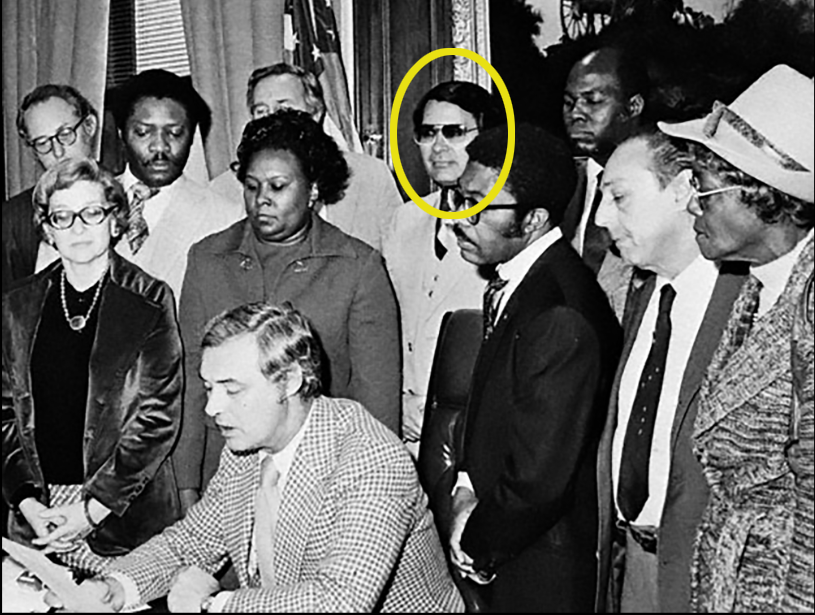
Even if Jones’ story ended here, it would be quite a transformational journey. Jones would soon be appointed San Francisco housing commissioner by Mayor George Moscone (to the unanimous applause of the San Francisco Council of Supervisors). He had become a local king-maker in Democratic politics. And he was on the radar of national Democrats who were gearing up for the 1976 Democratic presidential primaries.
Yet there were the ongoing complaints about his Peoples Temple Church, the base of Jones’ operations. The constant murmurings about lawlessness, kidnappings, financial embezzlement and social security fraud. By this time in Jones’ career, there was a groundswell of dissident Church members and concerned families who claimed that Jones was not at all what he appeared to be. Tragically, these concerns fell on deaf ears in the swinging 1960’s of San Francisco, and into the 1970’s as Jones was commended by a sitting President and counted the California Governor as an admirer.
This cautionary tale goes back to 1931 in rural Crete, Indiana when Jim Jones was born to a poor family during the Great Depression. His father, a disabled World War I veteran with possible Ku Klux Klan ties, was largely absent due to alcoholism and health issues before abandoning Jones and his family at a young age. Jones’ mother, Lynetta, was noted for her strong personality and decidedly “nonconformist” views on religion and politics. It was Lynetta, an enthusiastic New Deal adherent, who most left her mark on young Jones. Lynetta’s strong anti-authoritarian, anti-traditional religious streak and her focus on racial and economic equality were unusual in 1930’s Middle America and directly shaped Jim’s early fascination with social justice
In his early years, Jones was noted as a loner who befriended outcasts and animals but also displayed cruelty and was verbally sexually inappropriate to younger playmates.
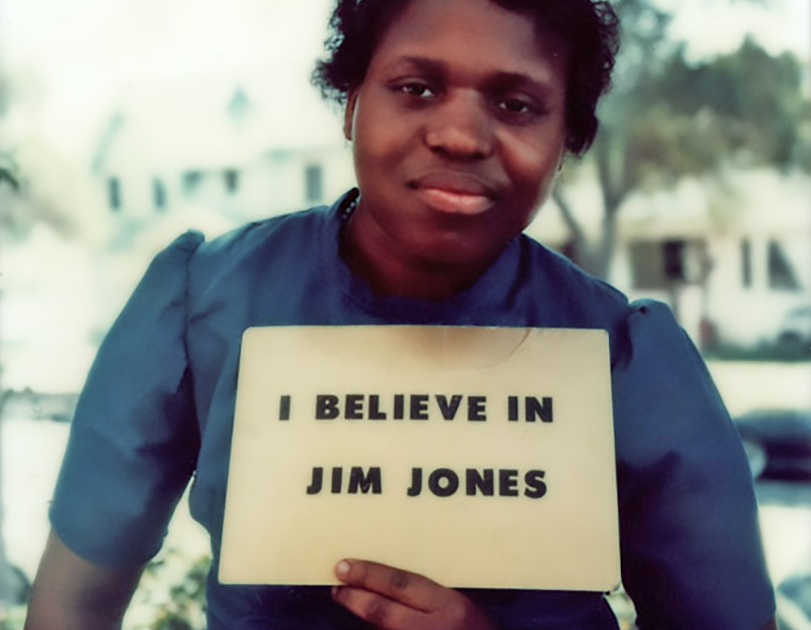
By 1955, Jones founded the Peoples Temple in Indianapolis, emphasizing racial equality in a segregated era- a brave and revolutionary stance that attracted many African Americans. Jones was a dynamic speaker and as his church membership swelled, he was soon noticed by local officials and even appointed head of the Indianapolis Human Rights Commission by Mayor Charles Boswell. Jones was noted during this time for his successful desegregation of public facilities like hospitals, theaters, and police departments.
However, behind this facade of social justice, Jones engaged in deliberate fraud to build his following and finances. Jones and his aides continued church services with staged fake faith healings to impress his audiences and spike donations to his ministry. Interestingly, Jones used some of these fraud-induced donations to fund his soup kitchens and other ministry outreach efforts for the benefit of the local poor and downtrodden.
Indeed what stands out for this wayward faith healer from America’s heartland was his later popularity among the urban professional class in Northern California, one of America’s most aggressively secular regions; here Jones was able to recruit numerous college-educated professionals when he moved his Peoples Temple congregation to San Francisco and grew it into a major political and social force with thousands of members.
Once in San Francisco, Jones changed focus, deliberately recruited young, educated white progressives who were drawn to the group’s interracial activism, anti-poverty programs, and emerging socialist ideals. This was meant to complement the predominantly Black, working-class core of Jones’ existing congregation.
And it was here that Jones started coming out in the open with Marxist sensibilities that he kept mostly hidden in Indiana. Starting in 1965, Jones openly began to denounce capitalism as a system that perpetuated racism and poverty, drawing on the Communist Manifesto’s argument that capitalism creates class antagonisms. He often contrasted the Temple’s communal living with the “greed” of the American middle and upper classes.
Tellingly, Jones praised the Communist Manifesto’s vision of a classless society, promising his followers that the Temple was building such a “new world” where “all would share equally.”
Predictably, many of the California Temple’s “staff” included increasing numbers of college-educated white women like member Sandy Bradshaw (a socialist organizer) who managed sensitive operations, such as lobbying and media relations. Doctors, lawyers, and civil servants from the Bay Area’s White and Black professional classes also joined, contributing to the group’s urban services like nursing homes and legal aid.
In essence, the presence of college-educated professionals was not just incidental but a strategic element that elevated the Temple’s profile in San Francisco’s progressive scene, blending idealism with the group’s darker undercurrents.
Walls Close In & Sex Scandals
Then in August 1977 issue of the now-defunct New West magazine featured an exposé by Marshall Kilduff amplifying years of alleged crimes and abuse by Jones. Specifically, the New West article detailed how Jones’ control over the Temple extended into shady finances, engaged in fraud and physical intimidation, and even implicated Jones and his followers of involvement in mysterious deaths and in accusations of hostage-taking. There was also the disturbing accounts of Jones’ control over every aspect of his followers’ lives, including member sex lives, marriages, and relationships. Indeed, Jones had at times banned or restricted sexual activity between member spouses to prioritize communal devotion, while demanding sexual favors from both women and men—often framing it as a “privilege” or a ”revolutionary act”.
These revelations brought a whirlwind of unwanted attention that only fed into Jone’s own neo-Marxist narrative of persecution by the FBI and CIA. This fact directly contributed to the pivotal decision by Jones to relocate the majority of the Temple’s membership to Jonestown, Guyana, in July 1977. The relocation was a direct strategic response to this escalating criticism and the looming threat of intensifying investigations by local and federal law enforcement.
This move was highly irregular and suspicious to any rational observers at the time, but did not seem to phase Jones’ die-hard political patrons in San Francisco.
The Harvey Milk Connection
Indeed, one such patron was Harvey Milk, the pioneering gay rights activist and titular character of the film where he was portrayed by Sean Penn. Milk, who was elected to the Board of Supervisors in 1977 after several failed campaigns, leveraged the Temple’s ability to mobilize hundreds of volunteers for door-to-door canvassing, phone banking, and voter turnout.
Milk’s engagement with Jones began as part of broader alliances in San Francisco’s left-wing politics, where the Peoples Temple was seen as a powerhouse for social justice causes like racial integration, anti-poverty initiatives, and gay rights advocacy. Jones positioned the Temple as a supporter of gay issues, denouncing anti-gay violence and backing measures against discrimination in his newspaper, the Peoples Forum.
As negative press about the Peoples Temple emerged, Milk sent a letter to President Jimmy Carter praising Jones as a man of “the highest character” who embodied “compassion, empathy, and sensitivity,” urging the administration to dismiss complaints from Concerned Relatives of People Temple (a group of defectors and families) as baseless. Milk also contacted Guyanese Prime Minister Forbes Burnham to advocate for Jones, helping to quash potential legal actions against the Temple in Guyana.
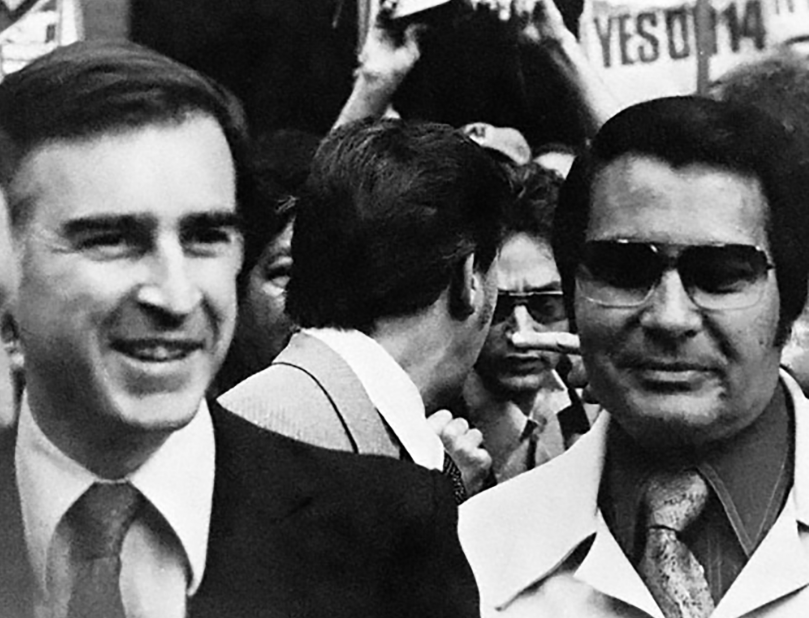
Milk’s defenses were not isolated; they aligned with those from other Democrats like Assemblyman Willie Brown and Governor Jerry Brown, who also praised Jones publicly.
And then there was the relationship between former U.S. First Lady Rosalynn Carter and Jones rooted in early years of Jimmy Carter’s presidency. Jones had become a darling of national Democratic politicians as a valuable ally in San Francisco due to his ability to mobilize large numbers of followers for voter turnout.
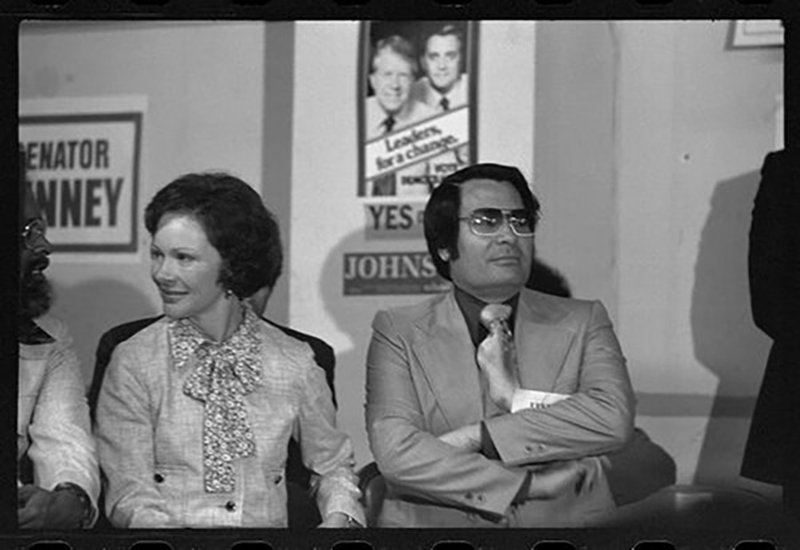
During the 1976 campaign, Rosalynn Carter, campaigning on behalf of her husband engaged directly with Jones and his congregation. She spoke from the pulpit at the Peoples Temple church, praising Jones’ss work for the Democrats. Contemporary accounts described Rosalynn as being “enthralled” or “captivated” by Jones during these interactions, highlighting his charismatic presence.
Later, Rosalynn and Jones dined privately at a high-end San Francisco restaurant during her campaign visit. This warm relationship with the future First Lady later extended beyond campaign; there was the March 17, 1977, letter from Jones to Rosalynn discussing his recent trip to Cuba and asked Rosalynn to urge the Carter administration to provide humanitarian aid to Fidel Castro’s Cuba. Rosalynn thanked Jones, expressing hope for future meetings and forwarding his suggestions to Carter’s notorious advisor Zbigniew Brzezinski (Mika’s dad).
Predictably, Jones’ ties to the Carters provided the Peoples Temple with added legitimacy, helping Jones deflect mounting criticisms of abuse within his organization. Even by the time of Carter’s election in 1976, there was already a flood of accusations and related investigations done on behalf of a group called Concerned Families that was comprised of Peoples Temple defectors and antagonistic family members of current members.
But Jones’ deep ties to powerful Democrats, so strong at the local level, allowed his reputation to defy gravity. For example, there was Willie Brown, the progressive Democrat icon who went on to serve as California’s Speaker of the Assembly and Mayor of San Francisco, who had a close and mutually beneficial political relationship with Jones.
Indeed, one notorious joint appearance between Brown and Jones was on September 25, 1976, at a lavish testimonial dinner hosted by the Peoples Temple at its San Francisco headquarters. The event drew high-profile guests, including then Governor Jerry Brown. Willie Brown served as the exuberant master of ceremonies, introducing speakers and toasting Jones effusively. Brown compared Jones to iconic figures like Martin Luther King Jr., Angela Davis, Albert Einstein, and Chairman Mao, emphasizing his revolutionary spirit and intellectual depth.
As late as 1977, Brown wrote a letter to Cuban leader Fidel Castro endorsing Jones as “a close personal friend and a highly trusted brother in the struggle for liberation,” vouching for his commitment to socialist ideals and international solidarity.
That same year, amid growing media scrutiny of the Temple (including the critical New West magazine article), Brown rallied to Jones’ss defense at a July 31 protest event attended by Harvey Milk. He proclaimed, “When somebody like Jim Jones comes on the scene… I will be here when you are under attack, because what you are about is what the whole system ought to be about!”

Eventually, decades later, Willie Brown acknowledged being deceived by Jones’ public persona but continued to emphasize the Temple’s tangible contributions to social causes years afterward. Quite curious how in his 2008 memoirs, Brown completely downplayed the connection, referring to Jones merely as “an obscure but charismatic San Francisco religious cult figure.” Quite an amazing shift that reflected broader efforts by San Francisco’s Democratic establishment to distance themselves from Jim Jones, despite the deep entanglements that had once made Jones one of their own.
It seems one notable exception to San Francisco’s infatuation with Jones was the late California Senator Dianne Feinstein who was then a S.F. supervisor whose reserved stance is further highlighted by contemporary Democratic Party sources who stated Feinstein was wary of Jones’s “demonic authoritarianism,” describing her as being “chilled” by the one time she heard him speak.
But the obvious question remains- if Jones’ creepy authoritarian tendencies were on public display and apparent to some officials like Feinstein, why did Harvey Milk and Willie Brown choose not to heed the ominous hints?
Jones wielded a neo-Marxist playbook of racial division to maintain control over his followers, particularly in the isolated confines of Jonestown. Once he had literally captured his social justice congress outside the range of U.S. authorities, Jones ramped up the self-pity along with the racial tensions; he pitted white and black members against each other, fostering paranoia, guilt, and dependency to cement his authority.
This strategy, rooted in racialized Marxist critiques that anticipated modern day Critical Race theory, was especially evident in his verbal assaults on white followers. Many readers can see the clear parallels of today’s Woke Left divisiveness to Jones’ chilling scapegoating of his loyal white followers as inherently flawed and in need of constant atonement.
Indeed, during the Jonestown harrowing “White Night” crisis meetings—simulated suicide drills that foreshadowed the tragic mass murder-suicide of November 18, 1978—Jones unleashed vitriolic attacks on white members, branding them as “soft” and “privileged.” He accused them of failing to grasp the struggles of their black comrades who formed the majority of the Temple’s membership.
Drawing from neo-Marxist rhetoric, Jones framed white followers as the “enemy within,” tainted by an “inherent capitalist upbringing” that made them potential betrayers of the community’s racial and socialist ideals. As one survivor, Deborah Layton, recounted- these rants sowed paranoia, encouraging black members to monitor whites for signs of disloyalty, thus deepening racial divisions in the cult.
Audio recordings from Jonestown, preserved in the Jonestown Institute archives, capture the venom of Jones’s rhetoric. He publicly disparaged white followers as “racist pigs” or “colonialists” in disguise and reinforced a narrative that whites required constant “re-education”. By casting whites as perpetual outsiders within the Temple, Jones kept them in a state of psychological submission. This public shaming, a hallmark of communist governments since Lenin, was used by Jones to break down individuals rather than capitalist systems.
The impact of these verbal assaults was particularly profound on the numerous college-educated white women in the group. Survivors like Layton describe how such attacks created a culture of self-doubt and fear, leading many to internalize guilt or remain in the Temple out of a desperate need for approval.
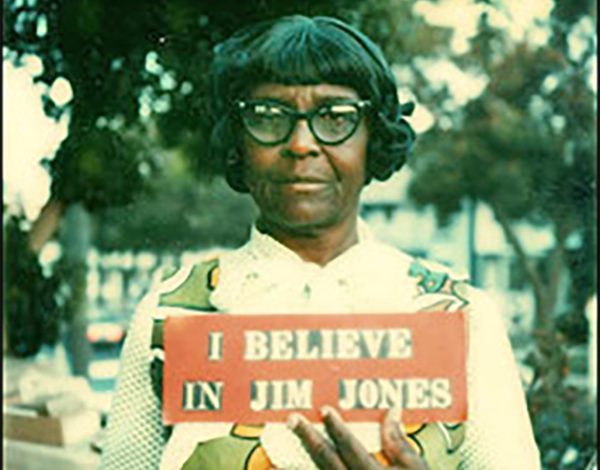
In the end, Jones and his social justice rhetoric cascaded into racial irony: a Marxist-inspired white leader inciting anti-white and anti-American hatred among mostly religious and mostly Black American followers- leading to their collective suicide. Survivor Hyacinth Thrash (a surviving Black female church member who fled into the Guyanese jungle during the mass suicide) later reflected on the betrayal, saying Jones’ hatred had poisoned the dream of equality. The Jonestown episode remains a tragic testament to how racialist and social justice grievances joined hands with neo-Marxist nihilism to lead true believers into an abyss of their own making. Along with their children.
Unfortunately, the need to recognize and name this type of group grievance and self-pity combined with toxic entitlement remains just as relevant today as in the 1970’s.