




By Morgan Miles —
The Bible and Jewish/Christian faith is validated by archaeology:
- Dead Sea scrolls: manuscripts from before the time of Jesus show the Bible remains unchanged.
- Ketef Hinnom silver scrolls: dated 600 BC, contain priestly blessing of Numbers 6:24
- Tel Dan inscription: dated 9th century BC, extra-biblical mention of “House of David.”
- Hezekiah’s Tunnel & Seal: dated 700 BC, corroborates King Hezekiah and Biblical history.
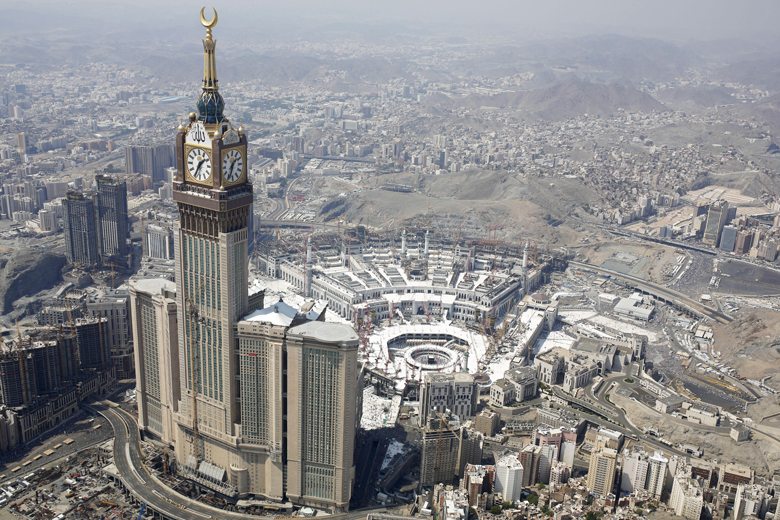
Let’s compare that to Islam and Mecca, the first city of the world (according to Islam), the mother of all cities, the centerpiece of history where Adam and Eve fell down from Heaven to start life on Earth, where Abraham and Hagar had interactions. What can archaeology in Mecca prove?
What have archaeologists dug up in Mecca?
Archaeological finds elsewhere on the Arabian Peninsula get trumpeted as corroborating evidence for Islam. Why not Mecca?
The answer: Nothing. Nada. Zilch. Zero.
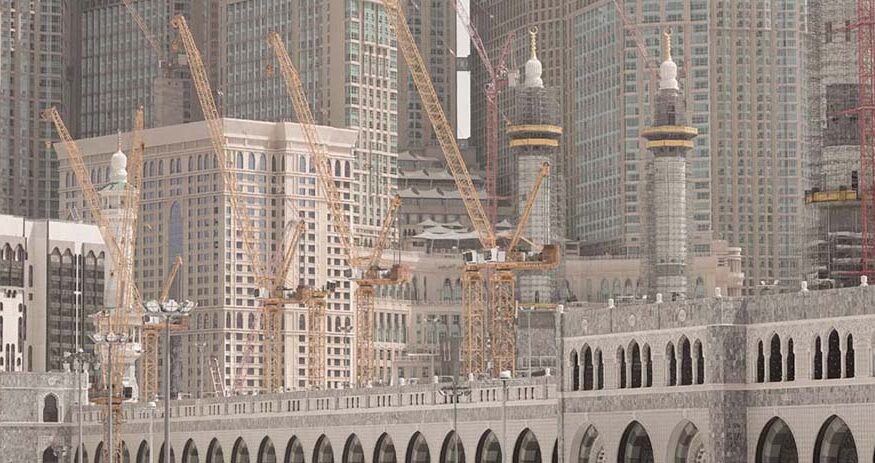
There is absolutely nothing found in Mecca, despite massive construction in recent years building tunnels and digging foundations for skyscrapers.
“No scientific archaeological excavation has ever been conducted in Mecca,” says a 2026 paper in the specialist journal Arabian Archaeology and Epigraphy.
THIS IS STRANGE, especially considering that Saudi Arabia does conduct archaeology extensively elsewhere, and its current antiquities law provides a formal licensing system for archaeological surveys and excavations.
Saudi Arabia has every interest in throwing light and legitimacy on Mecca’s revered history since it is promoting Mecca as a major tourist attraction and source of revenue from Muslims.
Archaeological digs are banned in Mecca and Medina — supposedly because they are sacred sites.
But a more unsettling skepticism would be: The Saudi leaders banned archaeology in Mecca because they know there’s nothing there, and the truth would completely knock the foundations out of Islam.
There IS archaeology attesting to Islam’s beginnings around the Dome of the Rock and on the Arabian Peninsula: early Quran manuscripts, coins, papyri, inscriptions seventh-century Arabic graffiti.
Just nothing in Mecca.

Patricia Crone, Oxford- and Cambridge-trained historian, demonstrated that, contrary to Islam’s historical narrative, Mecca was NOT a major center for trade in her book Meccan Trade and the Rise of Islam (Princeton University Press, 1987).
Among ancient maps, Mecca is hard to find:
- The Periplus of the Erythraean Sea, c. A.D. 40–70, omitted Mecca despite indepth trade routes.
- Strabo’s Geography, late first century B.C./early first century A.D., contains extensive descriptions of Arabia and fails to mention Mecca.
- Pliny the Elder’s Natural History, c. A.D. 77, gives a lengthy geographical description of Arabia and names numerous Arabian peoples, settlements and commercial centers. There is no unambiguous Mecca.
- The Tabula Peutingeriana (Peutinger Map) preserves a Roman road-map tradition probably based substantially on Late Antique material. Mecca is not identifiable on it.
- Late Roman/Byzantine geographical traditions likewise don’t give us an unmistakable pre-Islamic “Makkah” that can simply be plotted at modern Mecca.
- Ptolemy left it out (some argue that he misnamed and misplaced it.)
What does the apparent lack of inclusion of Mecca in maps and lack of archaeology suggest? That Mecca did not figure into early Islamic history and became a later adopted capitol with a history projected into the past.
Consider too the work of Dan Gibson, who demonstrated that qiblas of the first constructed mosque did not point to Mecca but towards Petra (or maybe Jerusalem).
The first Muslim caliphs, the Umayyads, were based in Damascus, Syria. The next caliphs, the Abbasids, based themselves in Baghdad. Later caliphs were based in Cairo, Cordoba and Istanbul. The earliest non-Muslim sources about the Arab conquests in the 630s and 640s discuss Muhammad and the Arabs but generally don’t give us that clear statement about Mecca.
It’s not until the eighth century that Islamic inscriptions, papyri and developing literary traditions talk about Mecca and the Kaaba as the pilgrimage center of Islam.

Archaeologists, if allowed into Mecca, would stratify 500 B.C. → 300 B.C. → A.D. 1 → A.D. 300 → A.D. 500 → Muhammad’s period (c. 570–632) → Umayyad → Abbasid. They would ask: How large was the settlement? What was being imported? What languages were being written? Was there evidence of pilgrimage? What religions were represented? When did the sanctuary develop? Was Mecca participating in long-distance trade?
But they are not allowed to study these questions. Does Islam have something to hide?
“There was no Mecca,” argues Dr. Jay Smith, a PhD who criticizes Islam. “There is no description of any place. There’s no reference to this place in any documentation. It’s not on any maps. It’s not on any inscriptions.”

1 Comment
Pingback: Israel’s history backed by archaeology. Not so, Mecca. | Mustard Seed Budget