




By Karine Keyser—
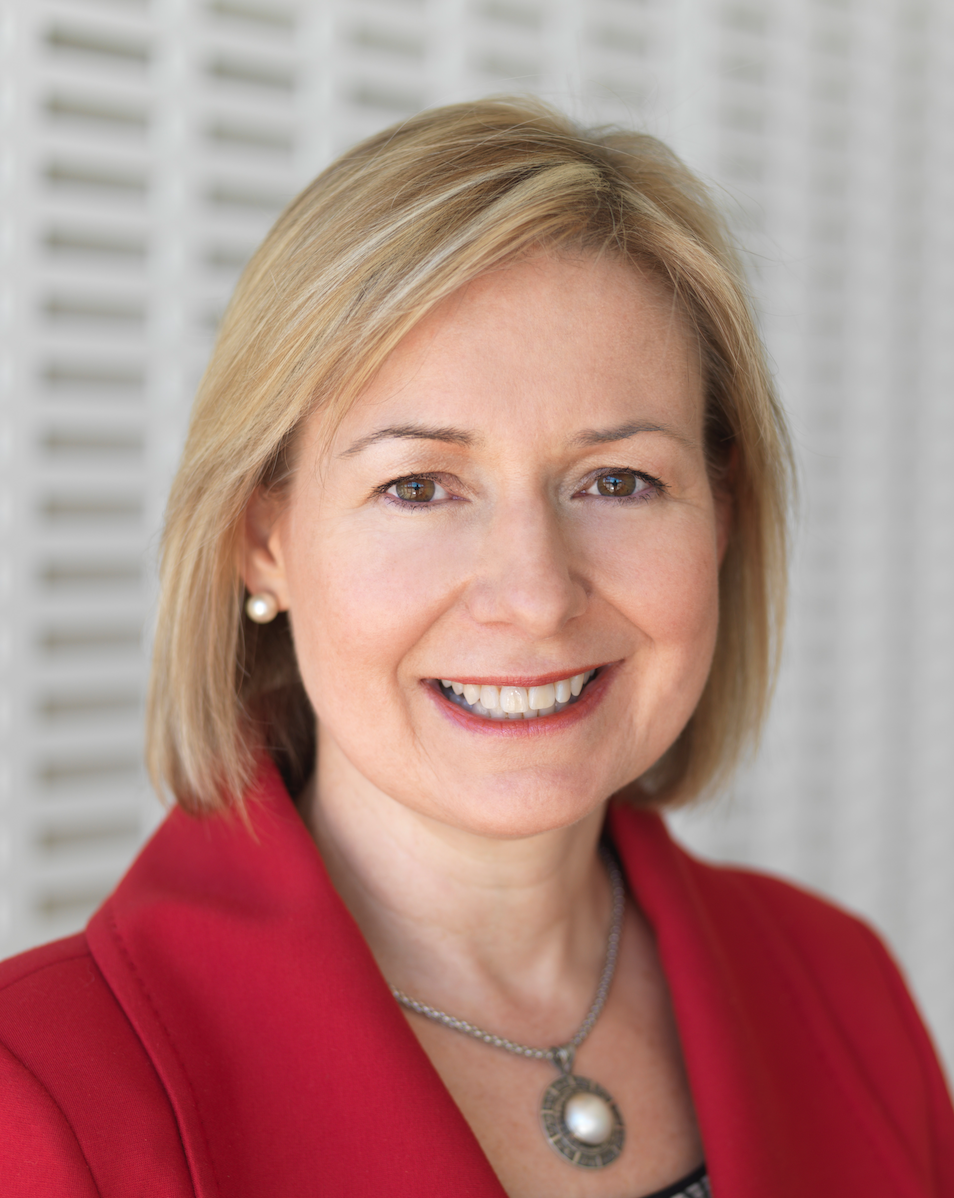
Trying to prove religion was a gimmick, MIT Professor Rosalind Picard surprised herself by becoming a Christian.
“I realized that religion is not at all what I thought it was,” Picard said on The Veritas Forum. “There were some really interesting and very attractive elements that were very historically verified.”
Today, Rosalind Picard is a born-again Christian, and she continues to learn how her love for science and her faith work together. She is Grover M. Hermann Professor of Health Sciences and Technology at MIT, founder and director of the Affective Computing Research Group at the MIT Media Lab, and co-founder of the startups Affectiva and Empatica.
Rosalind was born in Boston, Massachusetts, where she was adopted as an infant. She grew up traveling around the U.S. and sometimes out of the country because of her dad’s engineering job.

“As early as grade school, when I was a voracious reader and a straight-A student, I identified with being smart,” she said. “I believed smart people didn’t need religion. As a result, I declared myself an atheist and dismissed people who believed in God as uneducated.”
Her first experience with God was when she was in high school
She would babysit for a family whose parents she thought were very sharp, and they invited her to go to church with them. Rosalind constantly made excuses every Sunday to avoid going to church until the parents encouraged her to read the Bible, specifically to read Proverbs.
“When I first opened the Bible—this was the King James Version—I expected to find phony miracles, made-up creatures, and assorted gobbledygook,” she said. “To my surprise, Proverbs was full of wisdom. I had to pause while reading and think.”
This was Rosalind’s first time reading the Bible, so she assumed that she was only feeling this way because it was her first time. This made her decide to read the whole Bible to know for sure.
And when she started to feel different again, she thought that it might be her culture that was conditioning her to find Christianity attractive.
“Oh gosh, okay, if this book is influencing me to change my mind toward Christianity or toward belief in God, maybe I should study other world religions,” she said.
And so she did.

“I studied Buddhism, Hinduism, and several other faiths,” she said. “I visited temples, synagogues, mosques and other holy places.”
It was only when she was reconnected with one of her previous classmates, a guy that was very athletic and smart, while she was at Georgia Tech that everything changed for her.
Her previous classmate invited her to church and she decided to actually go this time.
She specifically noticed that once she found a church that helped answer any questions she had about Christianity, her belief in God grew a lot.
“I changed my viewpoint gradually from an atheist to an agnostic to a theist to somebody who actually believed that the historical Jesus and the New Testament, and what’s written about him, was true,” she said.
She noted that things began to actually change in her life when she started putting the things she learned from the Bible into practice.
“Actually, the real reason I’m here right now, spending time talking about something like this as opposed to just my research, is because it has made a huge difference in my life,” she said. “Part of the Christian faith is that there’s a gift for everybody in the world, whether you’re raised Christian or Hindu or Muslim or Buddhist or atheist or any of a long list of backgrounds.”
Professor Rosalind Picard’s most recent project, through one of her two companies, Empatica, involves researching and testing possible AI smartwatches that can detect seizures. She has mentioned multiple times how much her faith is reflected in her field of work.
“It made a huge difference in my life for the better—a big improvement, so I didn’t realize it needed so much improving at the time,” she said. “Those around me saw the difference, and today it is my source of strength, an amazing source of peace, joy and wisdom.”

1 Comment
Pingback: Ethiopian Bible shows African origin to Christianity – Pilgrim Dispatch News