




By Kaelyn Sollom –
He stood up when almost everyone else stayed quiet.
“Science isn’t about agreeing,” says Dr. Jay Bhattacharya. “It’s about asking hard questions.”
When COVID-19 spread across the world, most people listened to the government and stayed home.
But Dr. Jay Bhattacharya, a doctor and professor from Stanford, thought something wasn’t right.
He believed the lockdowns were hurting more people than they were helping.
So, he spoke out.
In 2020, he helped write something called the Great Barrington Declaration.
It said that instead of shutting everything down, we should protect the people most at risk and let others live more normally.
At first, he thought it would start a conversation.
Instead, it started backlash
People called him dangerous.
Some even tried to ruin his career. (Similar experience co-Barrington writer Martin Kulldorff fired from Harvard. The other author was Sunetra Gupta, epidemiologist from Oxford).
“I didn’t expect to be attacked,” he said. “I just wanted to help people.”
The government and media tried to shut him down.
Emails later showed leaders talking about doing a “devastating takedown” of what he said.
Social media made it hard for people to see his posts.
He lost friends.
He lost trust in people he once looked up to.
But he didn’t stop.
“I saw kids falling behind in school,” he said. “I saw old people dying alone.”
He talked about how lockdowns were hurting the poor the most.
He told stories of missed doctor visits, lost jobs, and people getting depressed.
“I wasn’t trying to be famous,” he said. “I was trying to stop the damage.”
Some people listened.
Others stayed angry.
Over time, studies started to show he was right about a lot of things.
Kids did fall behind.
People did suffer in silence.
He even helped with a court case that said the government shouldn’t silence voices like his online.
And then, something big happened.
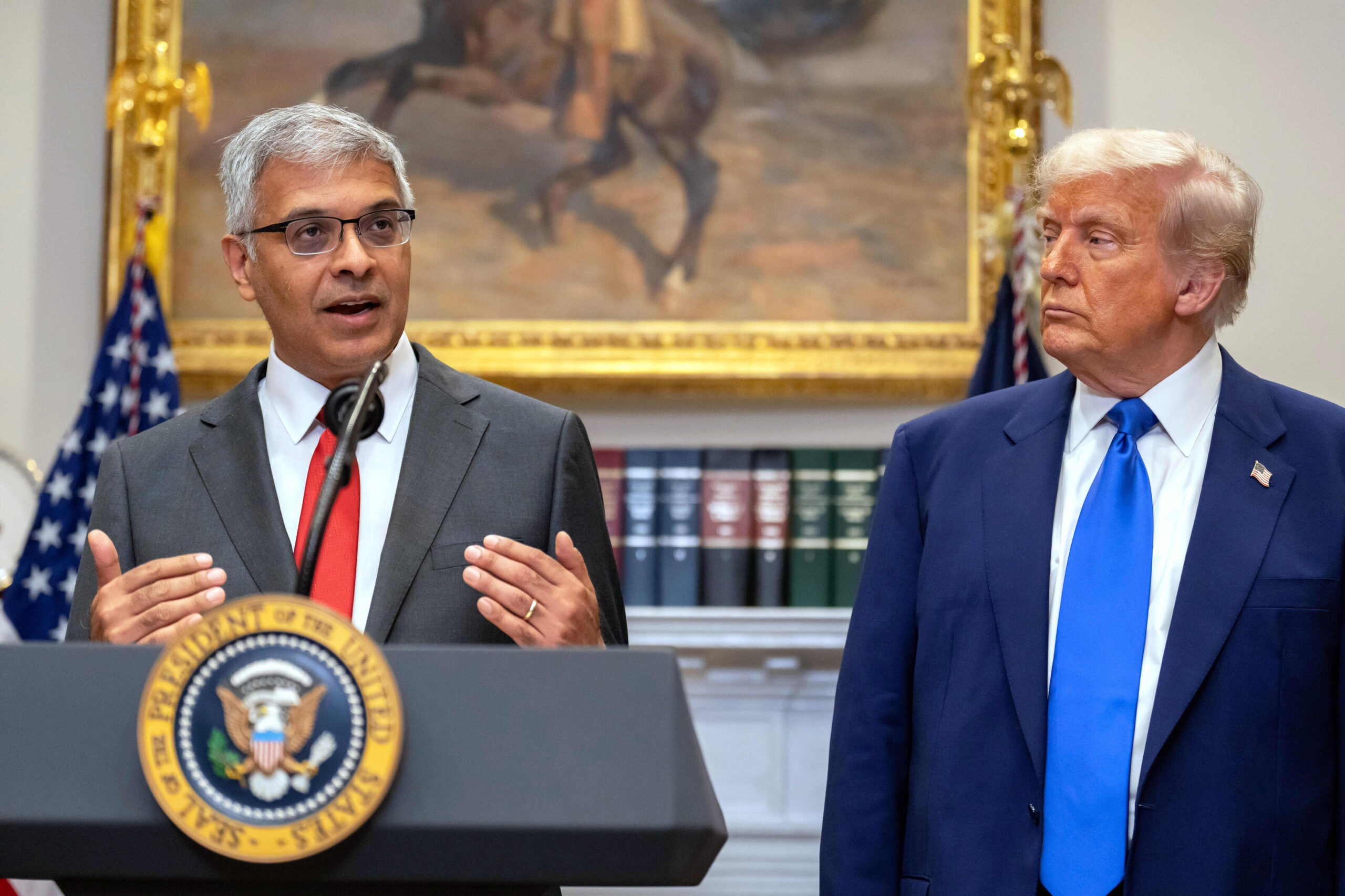
In 2025, Dr. Bhattacharya was named head of the National Institutes of Health (NIH) — one of the top science jobs in the country.
The same man who was once called “fringe” now leads the nation’s biggest health research group.
“I never wanted power,” he said. “I just wanted honesty.”
Now he’s trying to fix the system that once tried to shut him out.
He wants science to be open again — even if people disagree.
He wants kids, the poor, and the forgotten to be remembered.
“Telling the truth was hard,” he said. “But I’d do it again in a heartbeat.”
Editor’s Note: This article was written by a middle school student. It is being printed unedited. For two reasons: 1) It has a graceful simplicity. While not bogged down with concrete details, it communicates Bhattacharya’s story accurately. 2) Some of the quotes apparently came from sources behind a paywall and could not be verified by the editor. Notwithstanding, they seem consistent with the types of things Bhattacharya has said.
When Bhattacharya published the Great Barrington Declaration with two other renowned scientists, Anthony Fauci (director of the National Institute of Allergy and Infectious Diseases) and Francis Collins (director of the National Institutes for Health) called him a dangerous fringe scientist and coordinated his defamation in the media and social media.
Then Trump named him to head the NIH, taking the position of the man who maligned him. A congressional subcommittee is currently taking testimony of the dangers of the Covid vaccines and boosters and the government’s unwillingness to let people know the secondary effects.
Kudos, Kaelyn.

1 Comment
Pingback: Paula bashing is always in season – Pilgrim Dispatch News