




By Caleb Campos —
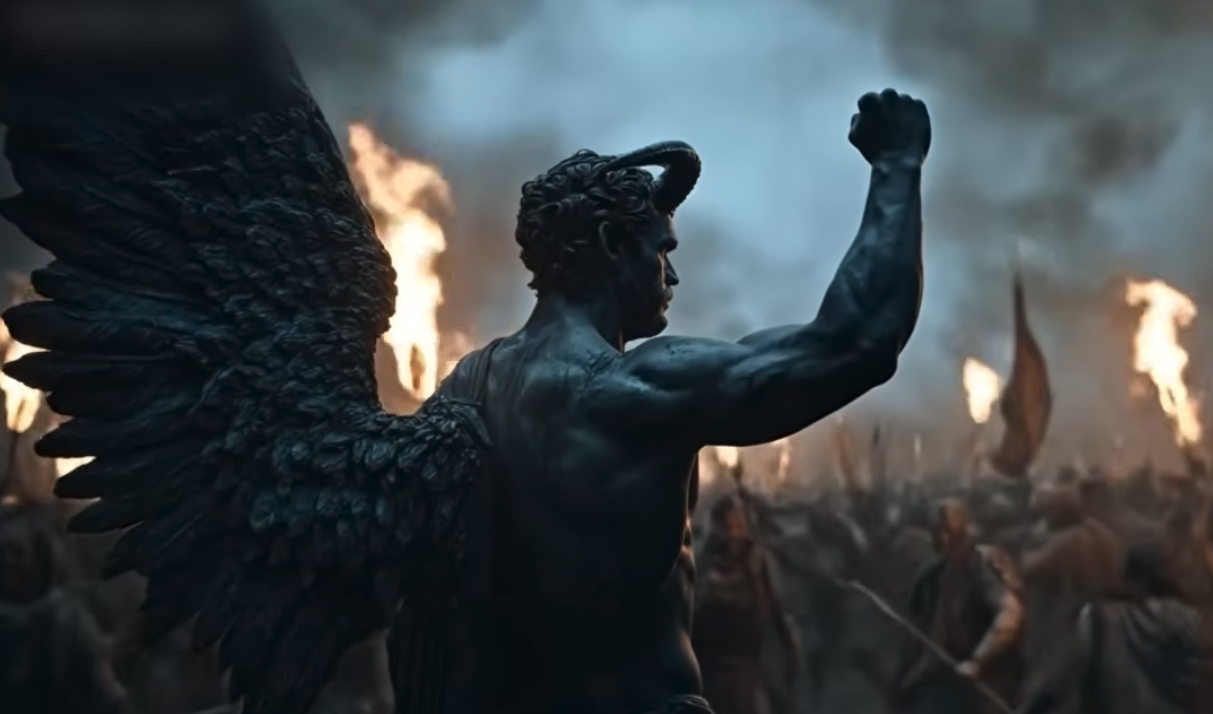
He brought the world Brave Heart, Pearl Harbor, Hacksaw Ridge, We Were Soldiers, Heaven Is for Real and Secretariat. Now screenwriter Randall Wallace is bringing “the Mount Everest of all stories,” The Resurrection of the Christ, which just ended filming in Italy.
“Common people, these disciples, fishermen, tax collectors, prostitutes, tavern owners followed this man Jesus and believed in him,” Wallace says. Then “he’s gone and they’re terrified. Three days later it doesn’t matter what you do to them, they will not stop saying they’ve seen him alive.”
Scheduled for debut in two parts, first on Good Friday March 26 of the coming year, and part 2
on Ascension Day May 6, in the U.S., The Resurrection is the long-awaited sequel to The Passion of the Christ, Mel Gibson’s vivid portrayal of Jesus’s crucifixion.
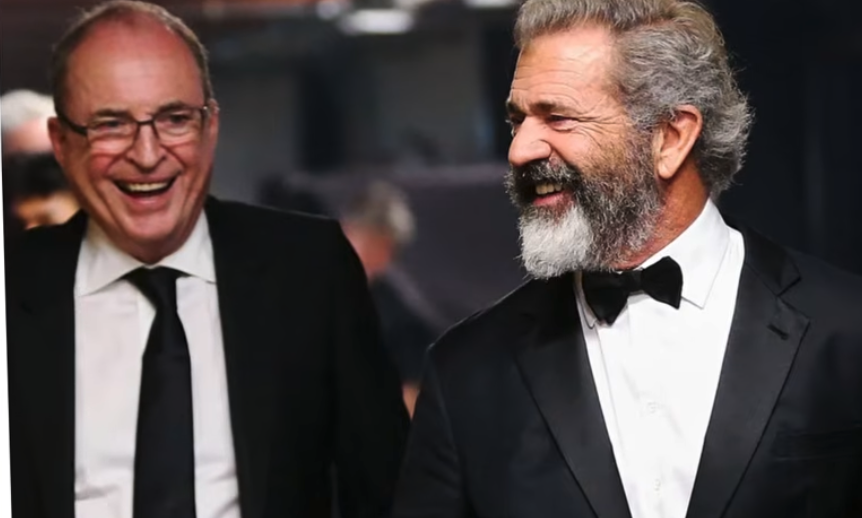
Gibson, who starred and directed Brave Heart, couldn’t find a production company to help with Passion, so he paid for it all by himself. Execs wouldn’t touch it, and not just because they were anti-Christian. They warned it would be a financial fiasco. Gibson disregarded their warnings.
Good thing.
Production and advertising cost $45M. The 2004 movie made a cool $611M — more than 13x the initial investment. Boggled movie bosses had to completely re-understand their audiences. The Christian market was massively under-served and dormant but could wake up, fill theaters and massively reward anyone willing to gamble on it.
As he was on the circuit promoting the movie (since advertising for The Passion was pretty unconventional, relying a lot on Christians to use word of mouth), Mel Gibson the staunch Catholic teamed up with his evangelical buddy from Brave Heart Randall Wallace, who helped Gibson feel more at home with Pentecostals.
On that promotional tour, Wallace shot his friend with the idea of a sequel to Passion.
“A crucifix for a Catholic, Jesus is on the cross. For a Protestant, it’s Christ has risen. He’s off the cross. We need to tell that story,” Wallace recalls “He got really quiet for a moment. And I knew he was listening really intently.

“I’ll write a screenplay, give it to you, Wallace told him. “You do whatever you want to do, but we need to get going with this. This is the Mount Everest of all stories.”
Gibson kept quiet. Then he spoke.
“I’m gonna have a mass said for you because Satan’s going to come after you,” he told Wallace.
“Mel, Satan has so many Baptist, he doesn’t care about them. He’s got all the Baptists he wants,” Wallace joked. “What about you? We need to pray for you.”
“He knew it was the greatest challenge you could really take on,” Wallace recalls.
The lives of Gibson and Wallace have been intertwined ever since Brave Heart. (Wallace believes but can’t prove he’s descended from William Wallace, a historical figure central to the movie.) Wallace rewrote Hacksaw Ridge and gave it to Gibson to direct (though he didn’t get a movie credit).
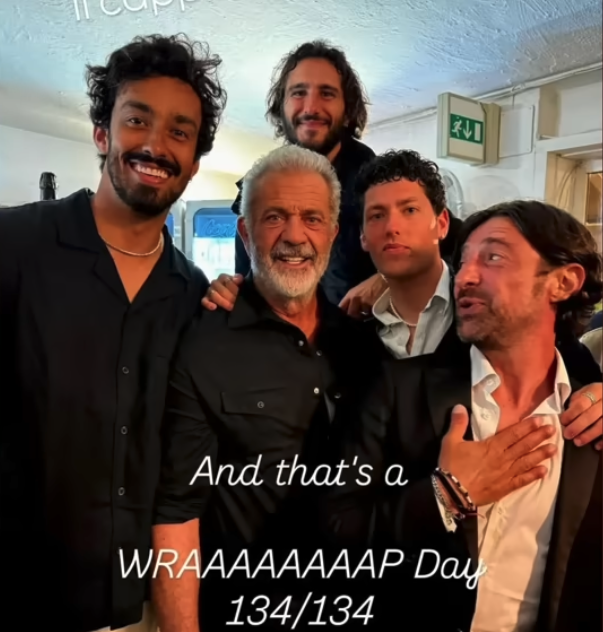
Their collaboration goes beyond professional; it’s friendship — so strong that Wallace chose Resurrection filming site in Italy for a very important decision in his life. He brought out his then-girlfriend (he lost his first marriage to Christine to stresses and growing apart) to see the set, and she sat right next to Gibson.
Never having been on a Hollywood set before, the girl was goo-goo awed.
Then Gibson called Randall over. He wanted to show him something. With everyone looking on, Wallace put his hand on the shoulder of his girlfriend. “I wanted to do this on the set of Resurrection because you brought my heart back from the dead,” he told her.
“I asked her to marry me and she was stuck,” Wallace relates. “She couldn’t say no. I got her in the crosshairs and she and she said yes.”
As a young boy, Randall Wallace suffered from severe asthma. Not being able to breathe made him panic, and panic truly endangered him.
“My lungs would close off to the degree that I was sure, even when I was quite small, that panic would kill me,” he writes. “I had to remain still, both physically and emotionally.”

It was his grandmother who kept him calm.
“Grandmother would sit with me and hold me upright all night long,” he remembers. “She’d sing to me, and tell me stories from her childhood and from the Bible, and most of all she’d keep her light blue eyes focused on mine so that I was drawn into her spirit and her heart.”
Grandmother Page not only helped him through the asthma attacks. She also helped him through his teenage doubts about God.
“Grandmother, how do you know there is a God?” he asked when he was 16.
“Oh Honey! You hear the birds sing and see the flowers grow and you know there’s God!”
“But Grandmother, I hear the birds and see the flowers, and I don’t” know there’s a God, he said, fleeing the interview and going into the car to cry.
“She didn’t follow me; she didn’t have to. I’m certain she prayed for me,” Wallace says. “We never spoke like that again. Somewhere along the line, faith came to me.”
He needed that faith as a promising T.V. writer in Hollywood. “I had more money than I needed, and had a young family so I bought a beautiful home for us,” he recalls.
Then a writer’s strike kept him out of work and out of paychecks. As mortgage payments went unpaid, he was threatened with losing his luxurious home.
“I got on my knees and I prayed from the depth of my soul and said to God, ‘If what is best for my sons is that they don’t grow up in a house with a lot of bedrooms and bathrooms and a swimming pool – and they grow up, as I did, in a 2-bedroom house with one bathroom and some economic struggles – if that’s what’s best for them, then I pray for the strength to bear it,” Wallace says.
“But if I only have one more thing that I can write before I have to go find some other way to feed my family, then let me write the kind of movie I want to see on screen,” he prayed. “Let me go down with my flag flying, not on my knees to the false idols of Hollywood.”
That prayer was the lead-up to writing Brave Heart.
Related content: Signs of revival in the movie theater, former Playboy bunny becomes a Christian, Caleb McLaughlin of Strangers Things chooses Jesus. Sources: Verité Vision, Wallace Entertainment, Patheos, others.

2 Comments
Pingback: ‘Mount Everest’ of stories: The Resurrection of the Christ | Mustard Seed Budget
Pingback: Child star, UCLA math, then Jesus for Danica McKellar – Pilgrim Dispatch News