




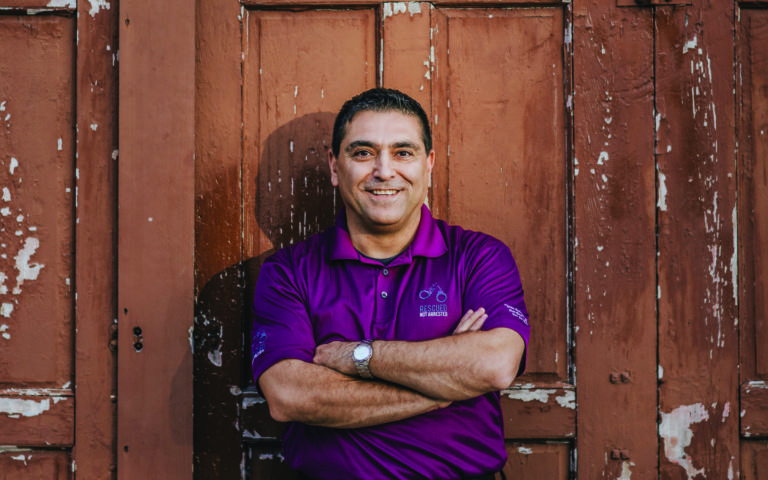
By Jackson Mefford –
To get full out of the cartel, Roger Munchian had to get a bullet in the back of his head.
“I had a confrontation with some of the leaders where they threatened to kill me if I walked away because I was a liability to them because I knew too much,” said Munchian. “I was so convicted that I told him that I realized I’m going to die. If I turn my back and he puts a slug in my back, then at least my wife and two kids would know that Dad died for a good cause.”
Munchian had fallen into trafficking as an immigrant from Armenia. In jail, he got saved and switched from trafficking drugs to trafficking Bibles – he calls them God’s AK-47s (in the world, he packed AK-47s, Uzis and 357 Magnums).
Roger Munchian grew up in communist Armenia. His dad was an abusive alcoholic, who spent time in a Siberian prison. His family lottery-awarded visa and went to Los Angeles when he was eight.
To escape his abusive father, Munchian took refuge in the streets. He started out as a mule transporting drugs.
“I learned the trade of things on the streets of L.A. very quickly,” he said. “I was already born in a country where I was in survival mode. Surviving was second nature to me.”
By 17, Munchian had already made his first million.
Money became his idol, the driving force of his life.
Munchian dove deep into the network. He wove seamlessly between Crips, Bloods, 18th Street and MS. He learned Spanish just to ease business (he also speaks Armenian and Russian). He expanded business to the East Coast.
He forked over $100K downpayment to buy a Mercedes-Benz S600 12-cylinder (V12) even before the ultra luxury car was produced.
Then he crashed it drunk.
“I was driving in Arizona doing 130 miles per hour,” he said. “I was coming from a VIP party; going home to do an after-party with a couple of girlfriends and a friend, and I lost control of the wheel, and it went flipping several times.
“All of them were flown out of the car,” he said (those are his words).
Emergency responders declared the three passengers dead, and Munchian faced manslaughter and DUI charges, along with 11 previous felonies.
Held without bail, Munchian confronted the God he thought he knew because he was born Christian (as in everybody from Armenia is Christian).
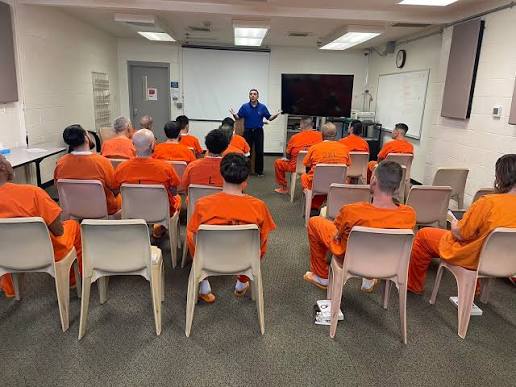
He had a “one-on-one moment” with God in the Madison Street Jail.
“As I was sitting in jail, God was working behind the scenes even before I knew it,” he said. “That’s how I realized there was a God.”
The next day, Munchian bonded out of jail. The girls miraculously survived, so manslaughter charge dropped.
He started reading a Bible, but not like a typical case. He compared it to other religions and did research into historicity, verifiability, manuscript reliability. He looked at other religions but became convinced that Christianity was the real deal.
He needed to get out of trafficking drugs, but the cartel wouldn’t let him.
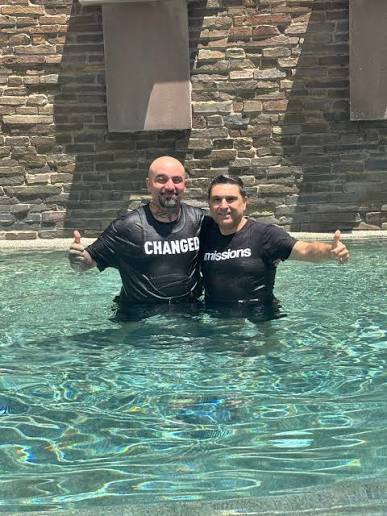
“I continued doing some movements from Mexico,” he said. “I realized I need to draw a line. I can’t continue this life now with this new found God and the direction I’m learning.”
When the cartel boss threatened to kill him, he stood his ground. If he had to die, he said, he would die for the truth.
Because God is God, he’s still alive, he said.
He got into serving God and turned his life around.
But all the crimes he had committed caught up with him. Federal and state investigators caught his network on the RICO Act, and Munchian found himself charged with crimes that would send him to prison for 150 years.
His lawyer advised him to flee the country .
Instead, he trusted God.
A wild mixture of events (the Mexican mafia tried to assassinate the prosecutor and the judge intervened based on his life’s turn around) meant he got only two years in prison.
“I can’t tell you how important it was for me to get my two years in prison,” he said. “This was literally a Bible college.”
He scoured the Bible and taught the Bible to other inmates.
As a result, Munchian today leads the Bible ministry to prisoners Rescued Not Arrested.
The non-profit organization distributes Bibles to prisoners, gives one-on-one mentorship to prisoners and helps them adapt to society after being released.
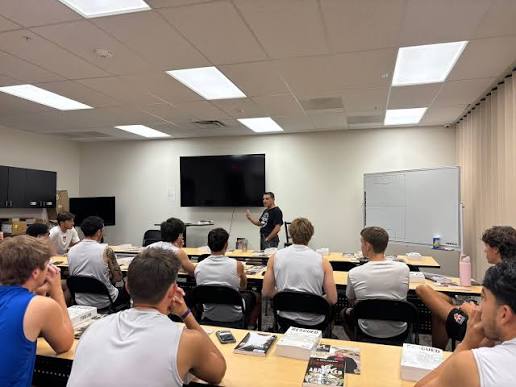
The ministry grew from state, to national and even global level.
