




By Donny Ndoka —
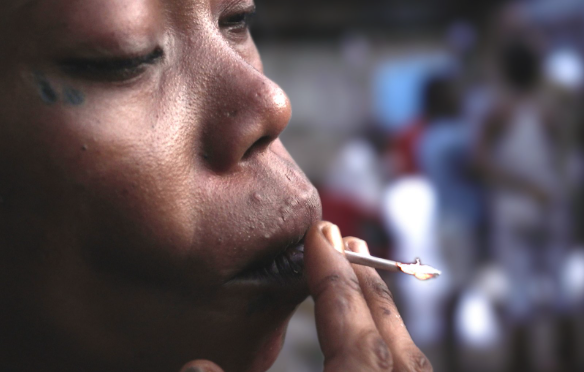
There’s a drug epidemic lacerating West Africa. Kush, a synthetic cannabinoid, is turning young people in zombies with open sores.
“This is an evil drug,” complains a user, strewn on the ground in an underpass in Sierra Leone.
Everyone who tries it wishes they never had. Most people stop taking the drug by dying. The effects of the drug are extreme confusion, hallucinations, agitation, seizures, cardiovascular problems and psychosis.

At 24, Elizabeth is abusing kush despite being pregnant, despite worrying it might harm the child growing in her womb. “I keep smoking it because it makes me forget my worries and challenges,” she says.
The drug is spreading fast — to Liberia, Senegal, Gambia, Guinea and Guinea Bissau — because it is cheap. Chemicals are combined in a lab and spread on plant material to be smoked. One sample tested in Sierra Leone was found 25 times more potent than fentanyl.
Users suffer severe swelling and open, necrotic wounds that are painful and require constant cleaning, but as yet scientists do not know what chemical in the drug cause the skin erosion, nor why it attacks legs more than other parts of the body.
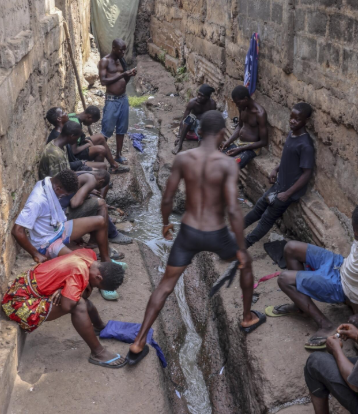
Sierra Leone remains the epicenter. The drug appears to have emerged there in 2016 and became dramatically more prevalent around 2020–’22. The government declared a national emergency in April 2024 because of kush and broader substance abuse.
Researchers estimate that kush has likely killed thousands of people across West Africa, although the absence of reliable toxicology and death-registration systems means there isn’t a trustworthy precise death toll.
Kush addicts die of respiratory failure, aspiration pneumonia and sepsis.
Overdoses are possible. Researchers studied 312 patients treated for suspected acute kush poisoning at four Sierra Leone treatment centers from June through November 2025. Their symptoms looked strikingly like an opioid overdose:
75% had altered consciousness.
63% had constricted pupils.
41% had respiratory compromise.
30% had dangerously slowed breathing.
29% had previously overdosed on kush.
Nine patients died during treatment.
Investigators say the chemicals needed to make kush are being ordered and shipped to Sierra Leone from the United Kingdom, Netherlands and China.
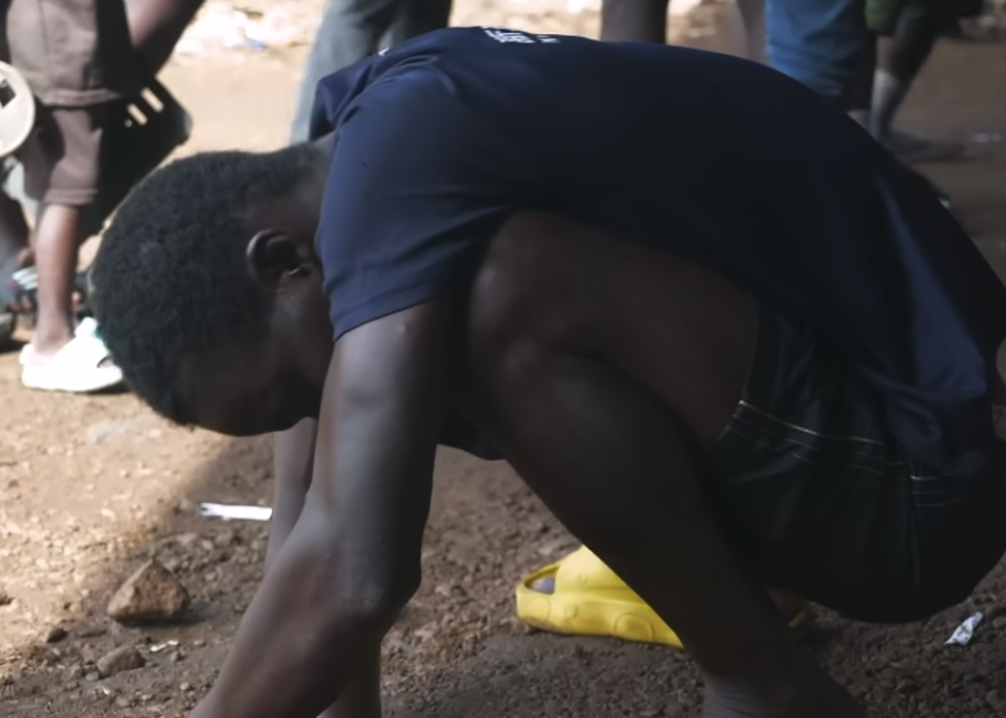
Number of users is hard to pin down in Africa, but the 2025 Afrobarometer survey said that of respondents:
61% said they knew a neighbor who had used kush.
49% knew a relative who had used it.
44% knew a friend who had used it.
Among 18- to 35-year-olds, 48% knew a friend who had used it.
“This drug, honestly, it makes me angry at my country,” Ousamane, 20, says. “Look at how it destroys young people like us. It makes us eat rotten food. A young person like me, in another country, I’d already have a car and a roof. But here, I’m just running around, looking for money to smoke.”
Sources: Skynew Australia, RFI, others.

1 Comment
Pingback: Kush: the new drug ravaging West Africa | Mustard Seed Budget